



Room to Roam is your guide to RV travel adventures off the beaten path. Learn how to turn your land into a money-making opportunity by hosting RVers seeking unique, off-grid escapes. Get tips on RV hosting, chat with fellow hosts and RVers, and discover the latest on RV life from the CurbNTurf community.
Popular articles

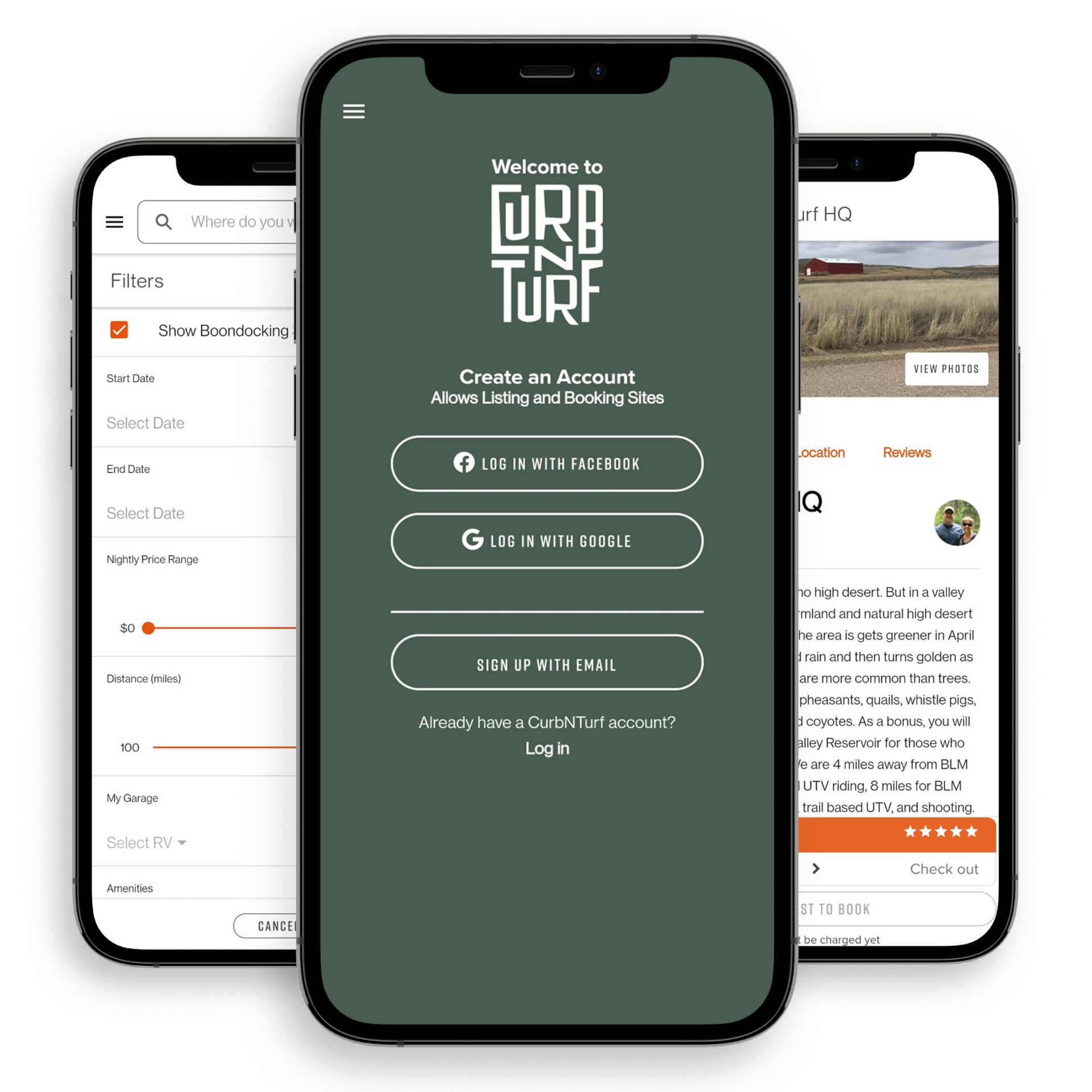
FREE TO DOWNLOAD, FREE TO USE.


Hey there, fellow traveler! If you have been out on the road lately, you already know the score. There is nothing quite like the freedom of chasing the horizon, watching the sunset from a new spot, and living life on your own terms. But let's be real for a second. When summer cranks up the thermostat and you are parked without a shore power hookup, your cozy home-on-wheels can start feeling a bit like a rolling toaster.
If you have ever found yourself nervously watching your battery monitor while sweating through your shirt, you are definitely not alone. And finding a comfortable, open spot to camp is only getting tougher. According to the RV Industry Association, U.S. manufacturers shipped 342,220 new RVs in 2025, the second straight year of growth, while the country still has only about 15,000 to 16,000 RV parks and campgrounds, a number that has barely moved in years. KOA's annual research backs up the squeeze: a majority of campers, 56 percent, reported difficulty finding an available site due to full bookings. That math means packed campgrounds, noisy neighbors, and concrete pads that radiate stored heat all night long. We unpacked exactly why this keeps happening in The Campground Crunch: Why Your Next Best Stay Isn't on a Map if you want the full picture.
The good news? You do not need to be chained to a crowded RV park's electrical pedestal to stay comfortable. Here is the core problem: a standard 13,500 BTU rooftop air conditioner pulls roughly 12 to 16 running amps, which works out to around 1,300 to 1,600 watts every hour it runs. Pulling that from a 12V battery bank is simply not practical for most rigs, which is why dry camping in the heat feels so intimidating. But with smart strategy, a few clever hacks, and the right campsite, you can master hot-weather RVing and enjoy the peace of private land camping without breaking a sweat or your battery bank.
1. Upgrade Your Location (Ditch the Asphalt)
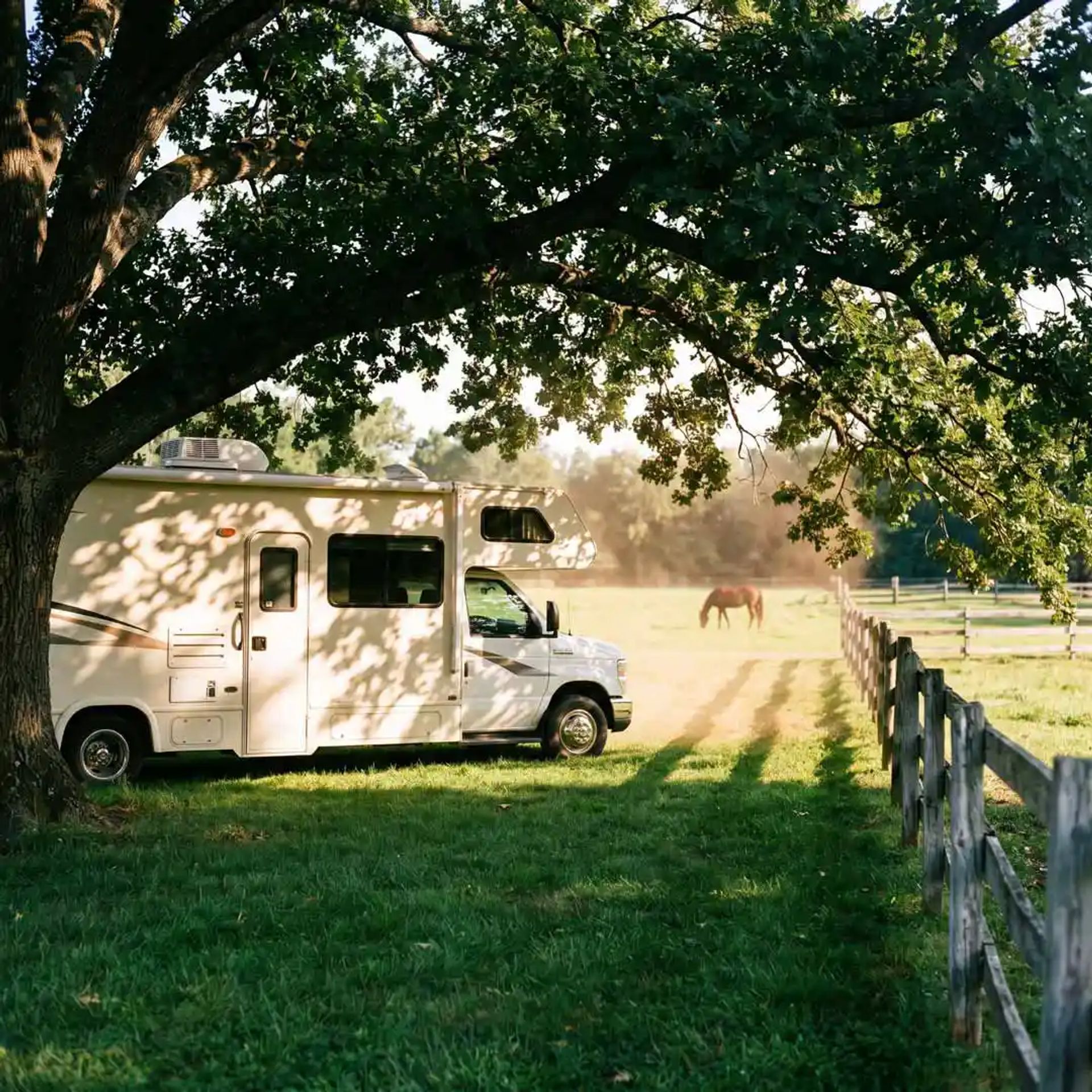
Before you even crack a window, your biggest weapon against the heat is where you choose to park. Traditional campgrounds and parking lots are often giant slabs of asphalt and concrete. Dark pavement in direct sun can reach 40 to 60 degrees hotter than the surrounding air temperature, and it keeps radiating that stored heat upward into your rig for hours after sunset. Parking on one is like setting up camp on a slow-release heating element.
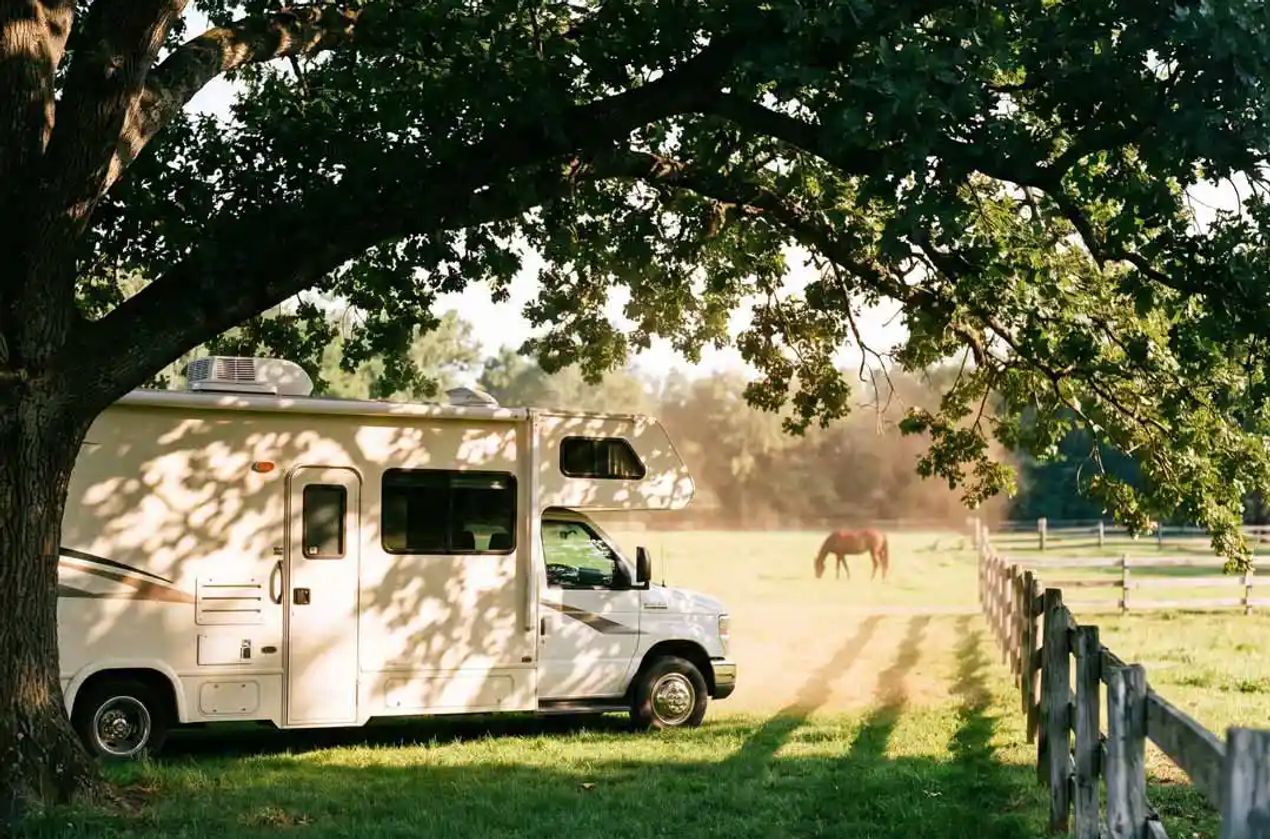
Instead, look for private land camping options that offer natural temperature control. Grass, dirt, and the ground beneath orchards or pastures stay dramatically cooler than asphalt because vegetation releases moisture and does not store solar heat the same way. This single decision can swing your overnight cabin temperature by a wide margin.
When you browse unique stays on CurbNTurf, you are not limited to standard campgrounds. You can choose from shaded driveways, lush vineyards, expansive farms, and quiet properties where mature tree canopies do the heavy lifting for you. If you are not sure how to read a listing's setup before you book, our guide on decoding power, water, and connectivity breaks down every amenity icon so you can find a genuinely shaded, well-suited spot.
2. Play the Shade Game and Chase the Angles
When camping without hookups, the sun is your clock. If your rig does not have total tree cover, you have to position it strategically.
The golden rule: face your RV's main living-side windows and awning toward the south or west. This ensures that during the hottest hours of the afternoon, your largest glass surfaces and your exterior refrigerator vents are shielded from the direct, blistering sun. Deploy your awning early in the day rather than waiting until you are already hot. An awning out by mid-morning keeps the ground beneath your door cool and creates a shaded microclimate right outside your living space, which makes a real difference when you step in and out.
If you can pick your parking angle on arrival, point the windshield (often the single biggest heat-gain window in a motorhome) away from the afternoon sun, or cover it completely.
3. Reflect the Heat Before It Gets Inside
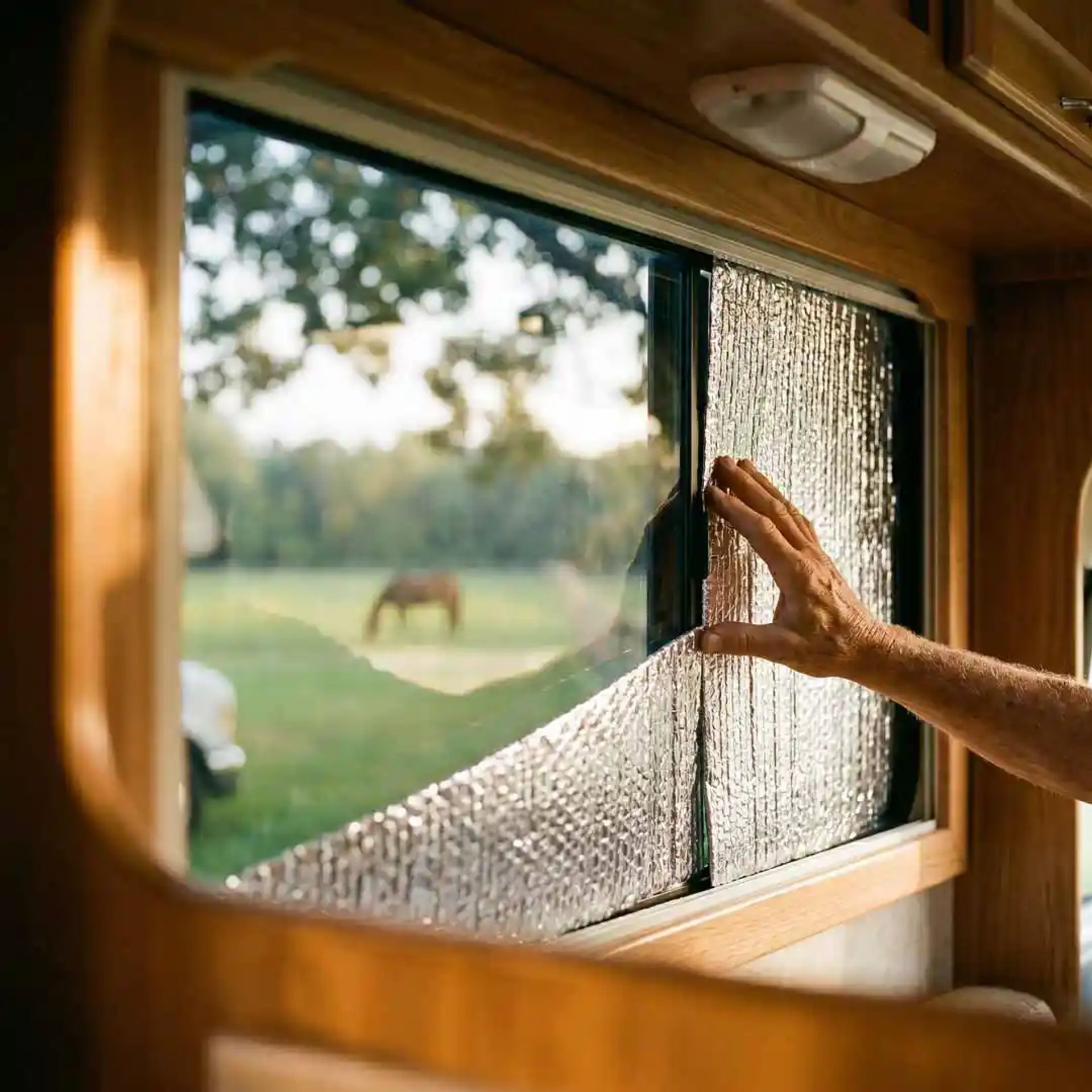
Once solar radiation passes through your glass windows, it gets trapped inside and creates a greenhouse effect. The fix is to stop the heat before it enters rather than fighting it once it is in.
Pick up a roll of reflective bubble insulation such as Reflectix and cut custom panels to fit every window, including roof vents and skylights. Pop them into the windows facing direct sun. It might make your rig look a bit like a spaceship from the outside, but reflecting that radiant load back out before it converts to trapped heat can meaningfully lower your interior temperature during peak afternoon hours.
Additionally, keep your blinds closed on the sunny side and open on the shaded side. You still get natural light without the thermal penalty. Cooking and other heat-generating activities are best moved outside under the awning on hot days, since even a stovetop or oven adds a surprising amount of heat to a small sealed space.
4. Master the Art of the 12V Wind Tunnel
When you cannot run a power-hungry air conditioner, airflow is everything. The goal is to exhaust the hot air trapped near your ceiling and pull cooler air in from outside.
If you have a high-powered roof vent fan, set it to exhaust so it blows air out. Then open a window on the shaded side of your RV, ideally one low to the ground or beneath your awning. This creates a vacuum effect that pulls fresh, cooler air across your living space and out the roof.
To boost the breeze, invest in a few portable, rechargeable 12V or USB-powered fans. Here is why this matters so much: a typical 12V fan draws only a couple of amps, while that rooftop AC draws 12 to 16. You can run several fans all night for a tiny fraction of the power one hour of air conditioning would cost, which keeps your house batteries healthy and your nights quiet. For a deeper look at matching your power setup to where you camp, our article on decoding your perfect CurbNTurf connection is a useful companion.
Real Travel Stories: How Sarah Tamed the Texas Heat
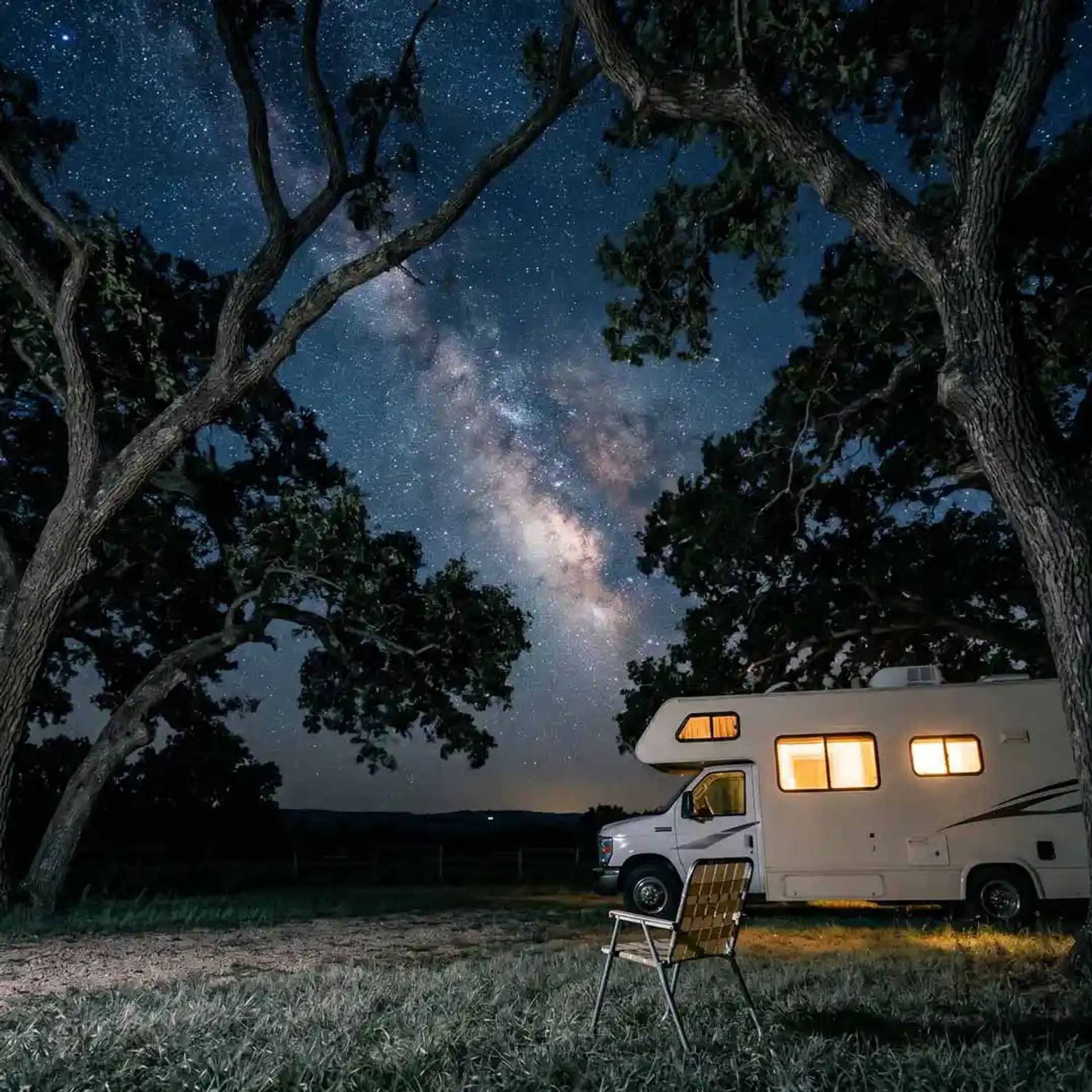
"Last July, my husband and I were traveling through Texas during a massive heatwave," says Sarah, a full-time RVer. "Every state park was booked solid, and the private commercial parks felt like hot, crowded parking lots. We ended up booking a beautiful 5-acre homestead through CurbNTurf instead. The host met us at the gate and showed us to a gorgeous spot tucked right under a grove of massive oak trees. Because we were parked on cool grass under deep shade and used our reflective window covers, we stayed completely comfortable using just our 12V fans. Plus we had total privacy, an incredible view of the stars, and zero campground noise. It completely changed how we look at summer dry camping."
Ready to Find Your Perfect Shaded Escape?
Hot-weather RVing does not mean compromising on comfort or cramming into a noisy RV park just for a power plug. By practicing smart thermal management and thinking outside the traditional campground box, you can enjoy pristine, quiet spaces even in the dead of summer. With hundreds of thousands of new rigs joining the road every year and a campground network that simply is not keeping pace, the travelers who look beyond the asphalt are the ones who actually stay cool and comfortable.
At CurbNTurf, we are passionate about helping you discover amazing alternative camping experiences. We connect a community of adventurous travelers with welcoming local landowners who have incredible spaces to share, from wide-open ranches to peaceful shaded driveways. Our platform handles the details with verified hosts, secure payments, and easy booking, so you can travel with absolute confidence. If you are brand new to the platform, our step-by-step guide to booking your first CurbNTurf stay walks you through the whole process, and if you are weighing it against paid RV clubs, Is CurbNTurf Free? Debunking Membership Myths explains exactly how our pay-as-you-go model works.
Do not let the summer crowds or rising temperatures keep you parked at home. Head over to CurbNTurf.com today, find your next shaded paradise, and make your next road trip unforgettable.
Keep Reading
- The Campground Crunch: Why Your Next Best Stay Isn't on a Map for the full story on why campgrounds keep filling up.
- Beyond the Crowded Campgrounds: Your First CurbNTurf Booking Guide to book your very first stay with confidence.
- Power, Water, or Peace? Decoding Your Perfect CurbNTurf Connection to match a site's amenities to your rig.
- Is CurbNTurf Free? Debunking Membership Myths for RV Travelers to understand the no-membership model.
- Get Your Rig Ready! The Ultimate Summer RV Prep Checklist to make sure your AC, roof, and tires are summer-ready before you go.
