
The Snowbird Migration: Best Private Stays from Southern California to Florida




Room to Roam is your guide to RV travel adventures off the beaten path. Learn how to turn your land into a money-making opportunity by hosting RVers seeking unique, off-grid escapes. Get tips on RV hosting, chat with fellow hosts and RVers, and discover the latest on RV life from the CurbNTurf community.
Popular articles

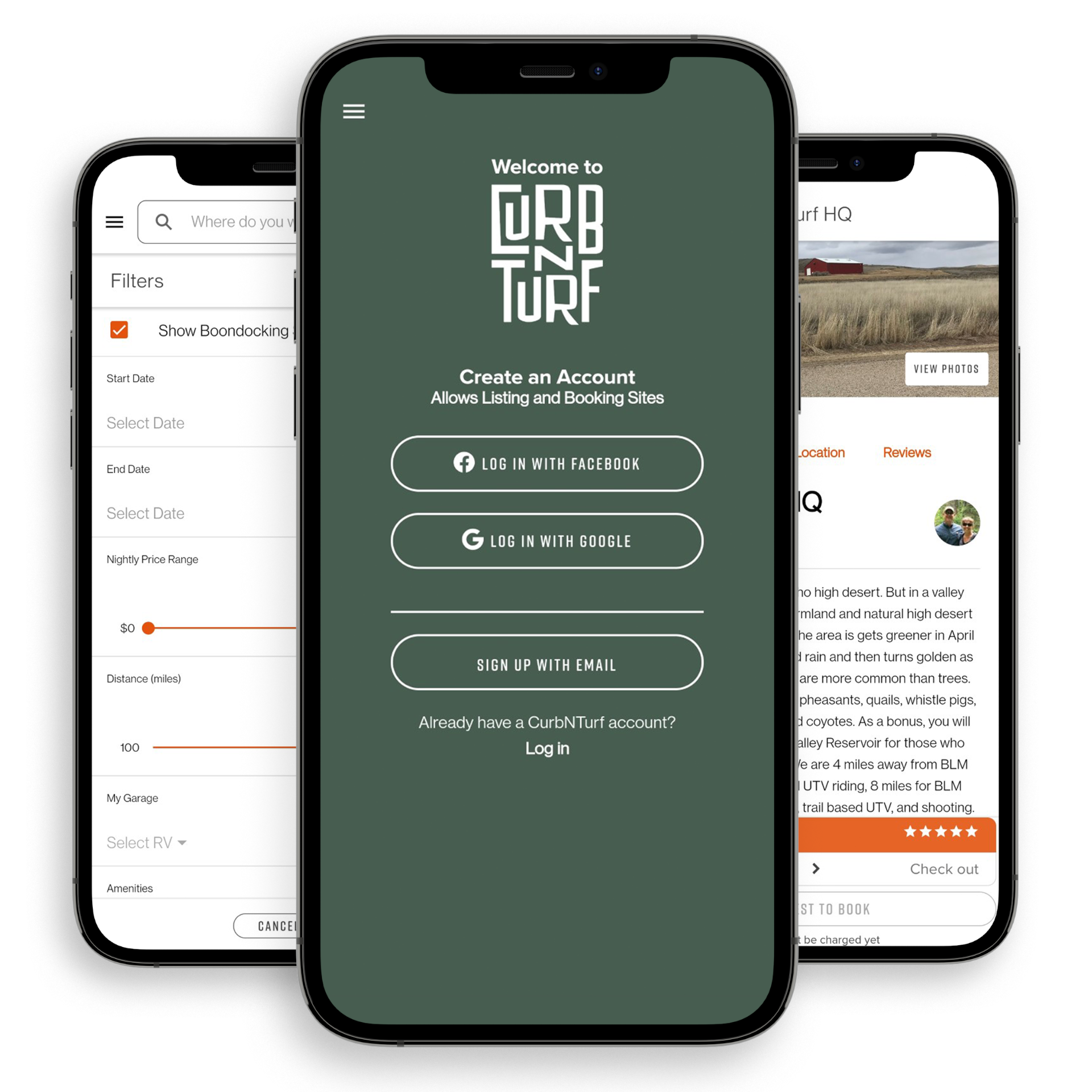
FREE TO DOWNLOAD, FREE TO USE.


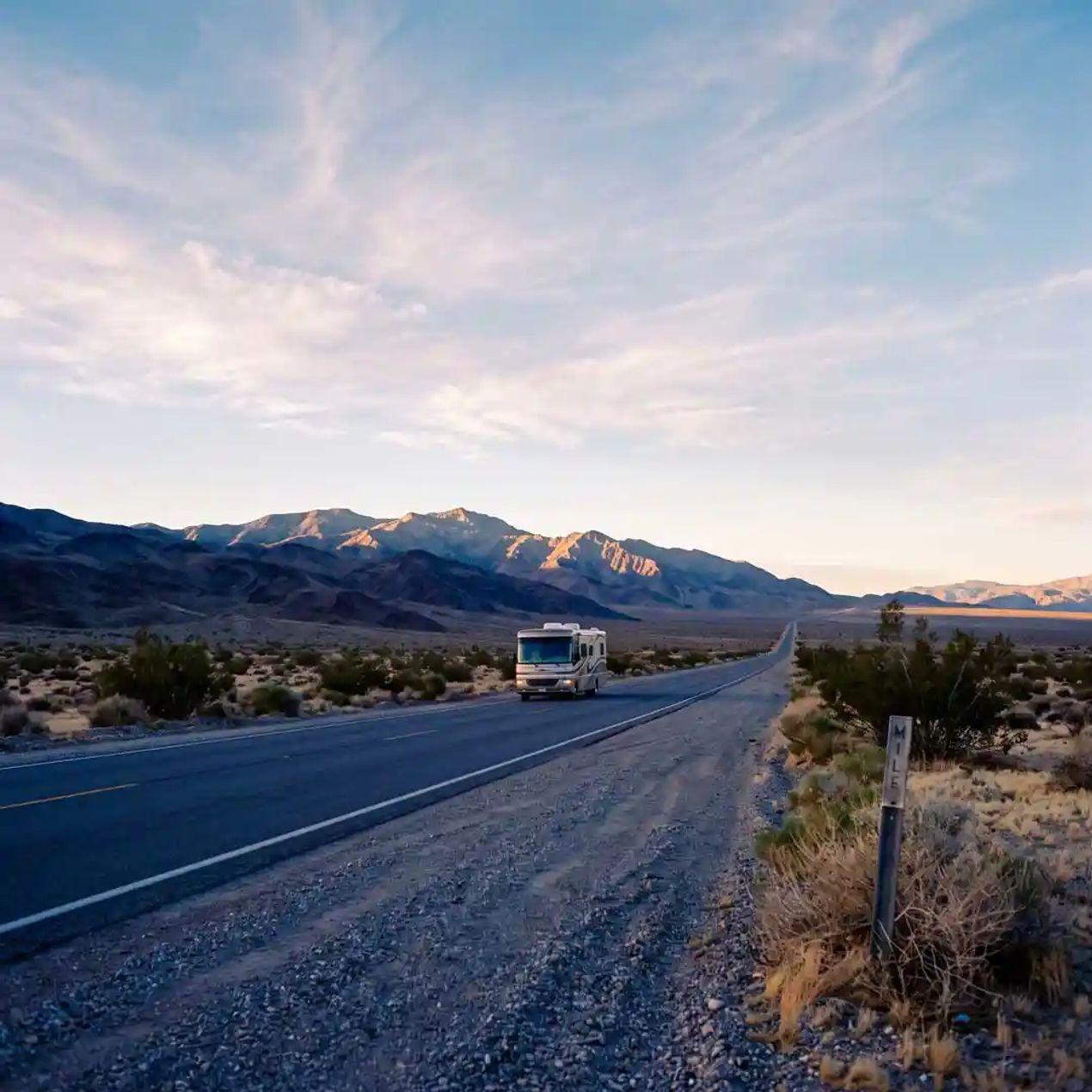
Hey there, fellow traveler! If you are reading this in October, you are right on schedule. October marks the start of the annual migration of more than a million snowbirds heading for the Sun Belt, and the peak southbound window runs from mid-October through late November.
Here is the problem every veteran snowbird knows. The RV parks in Mesa, Yuma, the Rio Grande Valley, and across Florida fill up early, and the good long-term spots get claimed by travelers who booked months ago. Meanwhile the southern route itself is dotted with private farms, ranches, orchards, and quiet driveways that most travelers never think to look for.
This is a guide to the route, the timing, and where to find private land stays along the way. Everything here points to properties you can search on CurbNTurf, where more than 500 private locations across North America are hosted by landowners rather than commercial parks.
Why Private Land Matters More This Season
Something changed in the RV world this year. Choice Hotels acquired Harvest Hosts, Boondockers Welcome, and Escapees in a 130 million dollar deal, consolidating three of the biggest names in alternative RV camping under one corporate owner.
If you are a snowbird who has leaned on those networks for years, it is worth knowing that CurbNTurf remains independent, community-based, and free to join, with no annual membership fee. You pay the host for the nights you book and nothing else. Our article Why CurbNTurf Stays Independent covers what that means in practice.
For a migration that might involve fifteen or twenty overnight stops between California and Florida, paying per night rather than per year tends to work out well, especially if you only travel seriously for part of the season.
Timing Your Departure
Snowbirds generally move in three waves.
The early birds, late September through October. These travelers want the longest possible season and head down early to claim the best long-term spots. If you are reading this now, you are in this group.
The main southbound wave, October into November. The bulk of the migration. Traffic is manageable, fall color is still worth seeing in the higher country, and availability is reasonable if you book a week or two ahead.
The holiday rush, mid-November into December. The largest single surge, as travelers aim to be settled somewhere warm before Thanksgiving and Christmas. This is the hardest window for finding anything last minute.
A word on pacing. Many experienced snowbirds use some version of the 3-3-3 rule: no more than 300 miles in a day, arrive by 3 p.m., and stay at least 3 nights. Some prefer 4-4-4. Either way, the point is the same. Driving a big rig 600 miles a day across the desert is how trips go wrong, and the whole advantage of leaving in October is that you do not have to.
The Route, Segment by Segment
Southern California
The Coachella Valley around Palm Springs and Indio is the classic starting point, built around hot mineral springs, with inland San Diego County offering quieter options for longer stays. This region is also agricultural in a way most travelers underestimate. Date farms, citrus groves, and ranch properties sit just outside the resort corridors, and those are exactly the kind of private stays worth searching for before you point east on I-10.
Further north, if your route starts in the Central Valley, Lockewood Acres in Vacaville is a 10-acre community-supported farm growing fruit, vegetables, and eggs using organic and biodynamic methods. Host Ben offers a farm tour at 4 p.m., electricity is available, pets are welcome, and the rate is $35 per night. Rigs up to 35 feet nose to tail, seven nights maximum, so treat this one as a good first leg rather than a destination.
Arizona
Arizona is the single biggest snowbird state on the western route, and it has four distinct hubs.
Phoenix and Mesa hold the largest cluster of snowbird resorts, along with Apache Junction just east. This is also where private land around the metro edges becomes valuable, since you get space and quiet without paying resort rates.
Tucson runs quieter and more scenic, with Sonoran desert properties and a slower pace.
Yuma gets more than 300 sunny days a year and sits right on the California border, making it a natural first or last stop.
Quartzsite is its own phenomenon, a small town that swells into one of the largest RV gatherings in the country every January and February. Private land in the surrounding area is worth booking well ahead of the January shows.
Arrive in Arizona around November for ideal temperatures, and plan to head out by late April before the desert heats up.
For a long Arizona stay, Mesquite Ranch Campground in Arivaca is built for exactly this season, right down to the name. It sits about 60 miles south of Tucson and runs 6 to 10 degrees cooler, with full hookups, a laundry room, restrooms with showers, a dump station, and a cantina area with BBQs and Blackstone grills. The property is fenced with a coded automatic gate, there is a stocked catch-and-release pond, and shaded horse stalls if you travel with horses. Buenos Aires National Wildlife Refuge and Arivaca Lake are close by. $55 per night, up to 30 nights.
New Mexico and West Texas
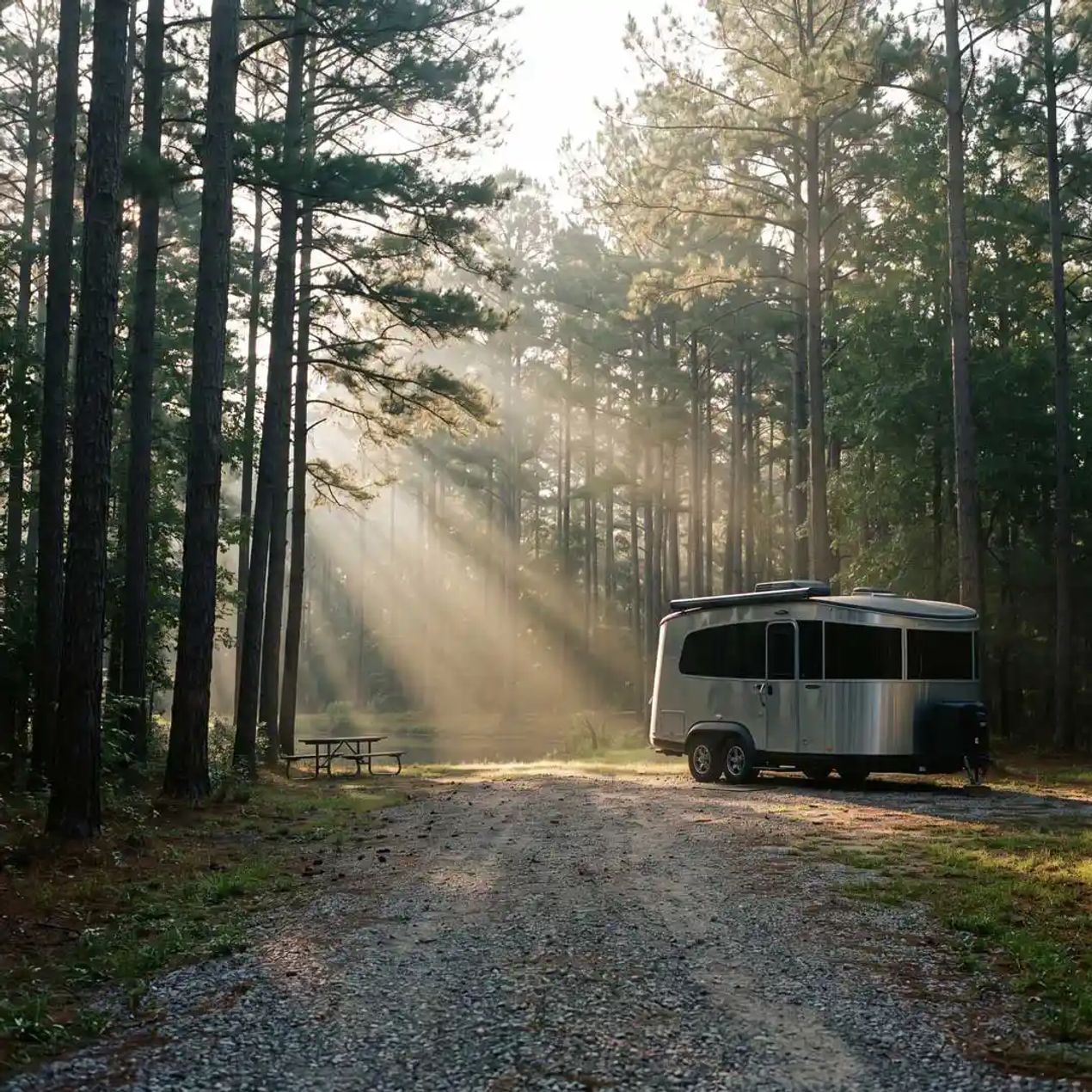
This is the stretch most people drive straight through, which is a mistake. Las Cruces, the Mesilla Valley, and the Big Bend region offer genuinely beautiful country, dark skies, and some of the lowest nightly rates on the entire route. Our article on pricing notes West Texas running in the 30 to 50 dollar range, which makes it one of the best values you will find between the coasts.
South and Coastal Texas
The Rio Grande Valley, specifically McAllen, Harlingen, Mission, and Weslaco, holds one of the largest concentrations of snowbird RV sites anywhere in the country. Most Winter Texans arrive late October through November and stay through March. The Coastal Bend around Corpus Christi and Rockport is the other major cluster.
On the Coastal Bend, Paradise South Camper and RV Spot in Corpus Christi sits about a minute from the beach on a canal, with 50-amp electric, water, septic, and Wi-Fi. Host Johnson provides a private dock, a fish cleaning station, kayaks and crab traps, and there is a boat ramp at the end of the canal plus a pool and hot tub. Port Aransas is roughly 17 minutes away. The site is wheelchair accessible and suits a rig around 30 feet. $35 per night, up to 30 nights, though note that cancellations here are non-refundable.
The Texas Hill Country is also worth a detour if you have time, and our wine trail guide covers the Highway 290 corridor between Johnson City and Fredericksburg.
The Gulf Coast
Gulf Shores and Orange Beach in Alabama, plus Biloxi and Gulfport in Mississippi, are milder than anywhere further north and far less crowded than the Florida peninsula. November through March works well here, though occasional cold fronts still reach the coast. Louisiana's rural parishes between Lake Charles and Baton Rouge are another underused stretch.
Two good stops on this leg. Fairhope Farm in Fairhope, Alabama, is about two miles from downtown and 30 miles from Orange Beach, with chickens, goats, ducks, and gardens on site and farm tours for a $10 donation. Pull-through and back-in sites, $25 per night, seven nights maximum, and worth knowing it is a no-pets property with a 5 p.m. check-in.
Further west, Huckleberry Hideaway Cabins and RV Resort in Minden, Louisiana, sits in the piney woods just minutes from downtown. Full hookups with showers, laundry, a hot tub and pool, a dog park, playground, game room, and a camp store in the main lodge, plus walking trails and a pond. Pull-through sites, campfires and pets allowed. $50 per night, up to 30 nights.
Florida
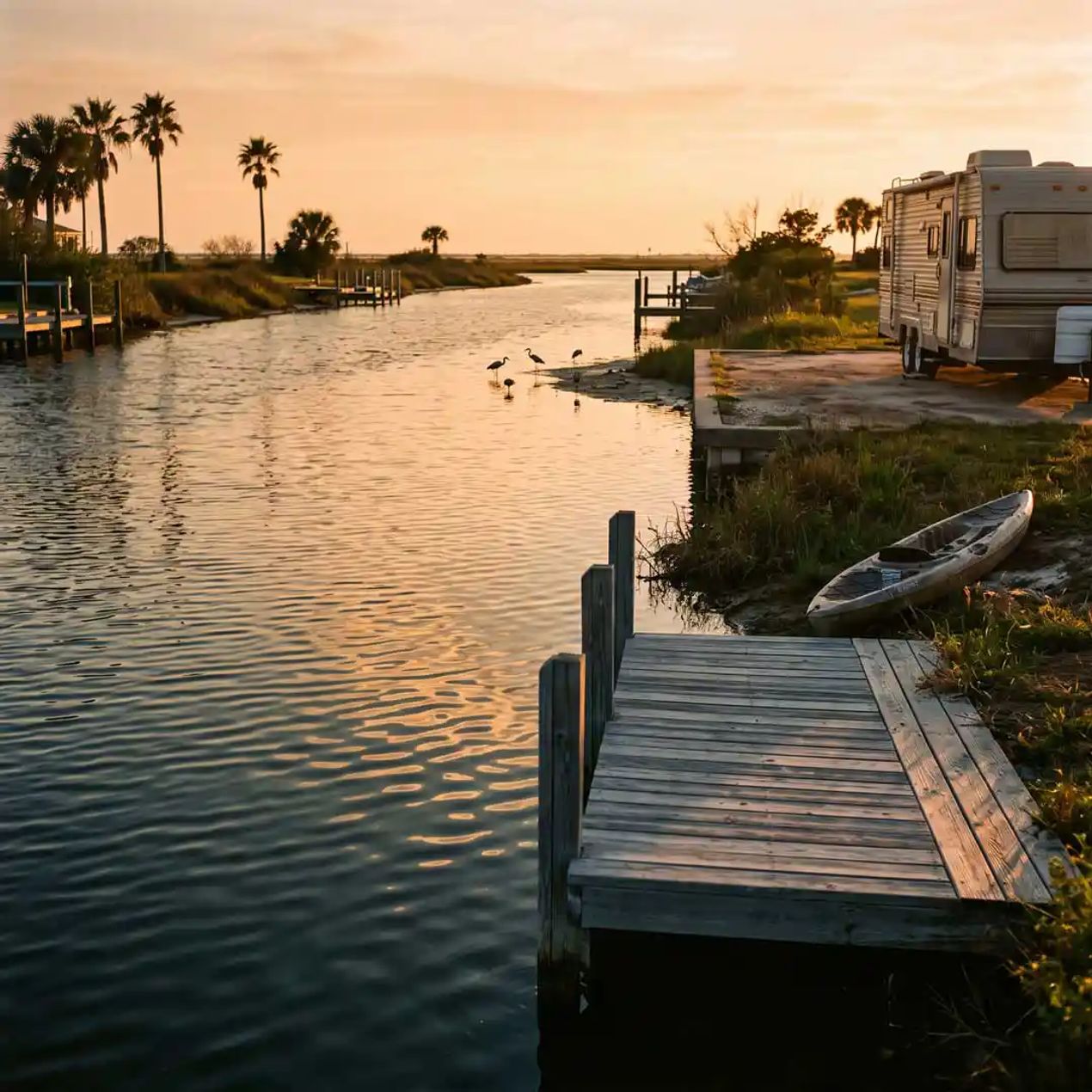
The booking window is everything in Florida. If you do not have something locked in, the shoulder periods of October and November, or late March into April, offer much better availability than the deep winter months.
Private land shines here specifically because of the crowding. Central Florida citrus country, the farmland around Ocala and the Panhandle, and the quieter inland properties away from the coastal resorts all offer space that simply does not exist in a 484-site resort. Florida snowbird hosts are among the highest earning on the platform, which tells you how strong demand is in the state.
Start in the Panhandle. Retroville 1960s-70s DriveIn in Freeport, near Destin, is a drive-in movie and TV themed RV park on a river frontage, with an office styled as a 1960s gas station that guests use as a photo spot. Full hookups with water, sewer, and electric, plus showers, a toilet, picnic tables, campfires, and pets allowed. Host Dowlin takes stays up to 14 nights at $65 per night. Worth noting the cancellation policy here is strict, with a half refund up to seven days out.
Further south in Polk County, Picturesque Mango Tango Estate in Auburndale is two lakefront acres with a two-story dock, a shared pool, a small petting zoo with chickens, pigeons, and rabbits, and roughly 450 mango trees host Matthew has planted. The PineApple Ln site has full hookups, and a pull-through fits up to 36 feet. LEGOLAND, the Orlando theme parks, and the Cypress Gardens ski shows are all close. $48 per night, two-night minimum and six-night maximum, so this is a stop rather than a base camp.
On the Atlantic side, Jupiter Farms Nursery and Bobcat is 2.5 acres of Florida slash pine and scrub palmetto, with a nursery driveway lined with mature mango and tropical shade trees and a short nature trail along a cypress wetland. Electricity on site, pull-through and back-in, and a long 30-night maximum. $25 per night, and cancellations are non-refundable.
Practical Notes for the Migration
Book the hardest segments first. Quartzsite in January, the Rio Grande Valley in December, and anywhere in Florida between Christmas and March. Fill in the easy overnight stops later.
Filter for what you actually need. Long stays need shore power, and many of the best rural properties are partial hookup or dry. Our guide on decoding power, water, and connectivity explains every amenity listing.
Watch the overnight lows early in the trip. Late October nights in northern Arizona and New Mexico drop well below freezing, and a propane furnace blower is a heavy draw on your batteries. Our article on sizing your battery bank runs the numbers.
Check the maximum stay before you fall in love with a listing. This is the detail snowbirds miss most often. Some private sites cap you at six or seven nights, which makes them a good overnight leg but useless as a winter base. Of the properties above, Mesquite Ranch, Paradise South, Huckleberry Hideaway, and Jupiter Farms all go to 30 nights. Retroville sits in the middle at 14. Lockewood Acres, Fairhope Farm, and Mango Tango are short stops by design. Build your route accordingly.
Message hosts about long stays. Many private landowners prefer a two-week or month-long booking over constant turnover, and some will negotiate on rate. It never hurts to ask.
Leave room in the schedule. Weather, repairs, and good places you did not expect to like are all reasons not to book every night of a three-month trip in advance.
Start Your Search
The migration is underway right now. The travelers who end up with the best winter are the ones who book the critical segments this month and stay flexible on the rest.
Open the CurbNTurf map, search the route from Southern California east, and find the private stays between the crowded resorts. If this is your first booking, our step-by-step guide walks through the process.
Keep Reading
- Winter RV Stays: Why Private Land Makes More Sense Than Campgrounds
- Why Snowbirding is More Than Just Escaping the Cold
- Boondocking vs. Moochdocking vs. CurbNTurf: What's the Difference?
- Power, Water, or Peace? Decoding Your Perfect CurbNTurf Connection
- Beyond the Crowded Campgrounds: Your First CurbNTurf Booking Guide