
Power Math for Boondockers: Sizing Your Battery Bank




Room to Roam is your guide to RV travel adventures off the beaten path. Learn how to turn your land into a money-making opportunity by hosting RVers seeking unique, off-grid escapes. Get tips on RV hosting, chat with fellow hosts and RVers, and discover the latest on RV life from the CurbNTurf community.

Popular articles



FREE TO DOWNLOAD, FREE TO USE.


Hey there, fellow traveler! Here is the mistake almost everyone makes with RV power. They walk into a shop, ask what battery they should buy, get told "a couple hundred amp hours should do it," and then spend the next two years annoyed that their system dies at three in the morning.
Battery sizing is not a guess. It is arithmetic, and it takes about twenty minutes. Here is how to do it properly.
Step 1: Figure Out What You Actually Use
Everything starts here. You cannot size a bank until you know your daily consumption, and almost nobody knows it off the top of their head.
Write down every device that runs off your batteries, the watts it draws, and how many hours a day it actually runs. Multiply watts by hours to get watt-hours, then add it all up.
Some realistic figures to work with. A 12V compressor refrigerator draws roughly 40 to 60 watts but cycles on and off, so it might average 400 to 600 watt-hours a day. LED lights run 5 to 15 watts each. A roof vent fan pulls 12 to 45 watts depending on speed. A water pump draws 50 to 70 watts but only runs a few minutes a day. Laptop charging is typically 45 to 65 watts. A Starlink Mini averages 16 to 40 watts in active use. A propane furnace blower is a surprise heavy hitter at 70 to 100 watts while running.
Add them up honestly. Most RVers land somewhere between 600 and 2,400 watt-hours per day depending on setup and season.
The better method: install a shunt-based battery monitor. It measures actual amp-hours in and out, which means you stop estimating and start knowing. If you are serious about boondocking, this is the single best hundred dollars you will spend, because every other decision depends on this number being right.
Step 2: Understand That a 100Ah Battery Is Not 100Ah
This is where most people go wrong. Rated capacity and usable capacity are different numbers, and the gap depends entirely on your battery chemistry.
Lead-acid and AGM should not be discharged below 50 percent. Go deeper regularly and you get accelerated sulfation, which can drop cycle life from around 500 cycles to fewer than 200. So a 100Ah AGM battery gives you about 50Ah of usable capacity.
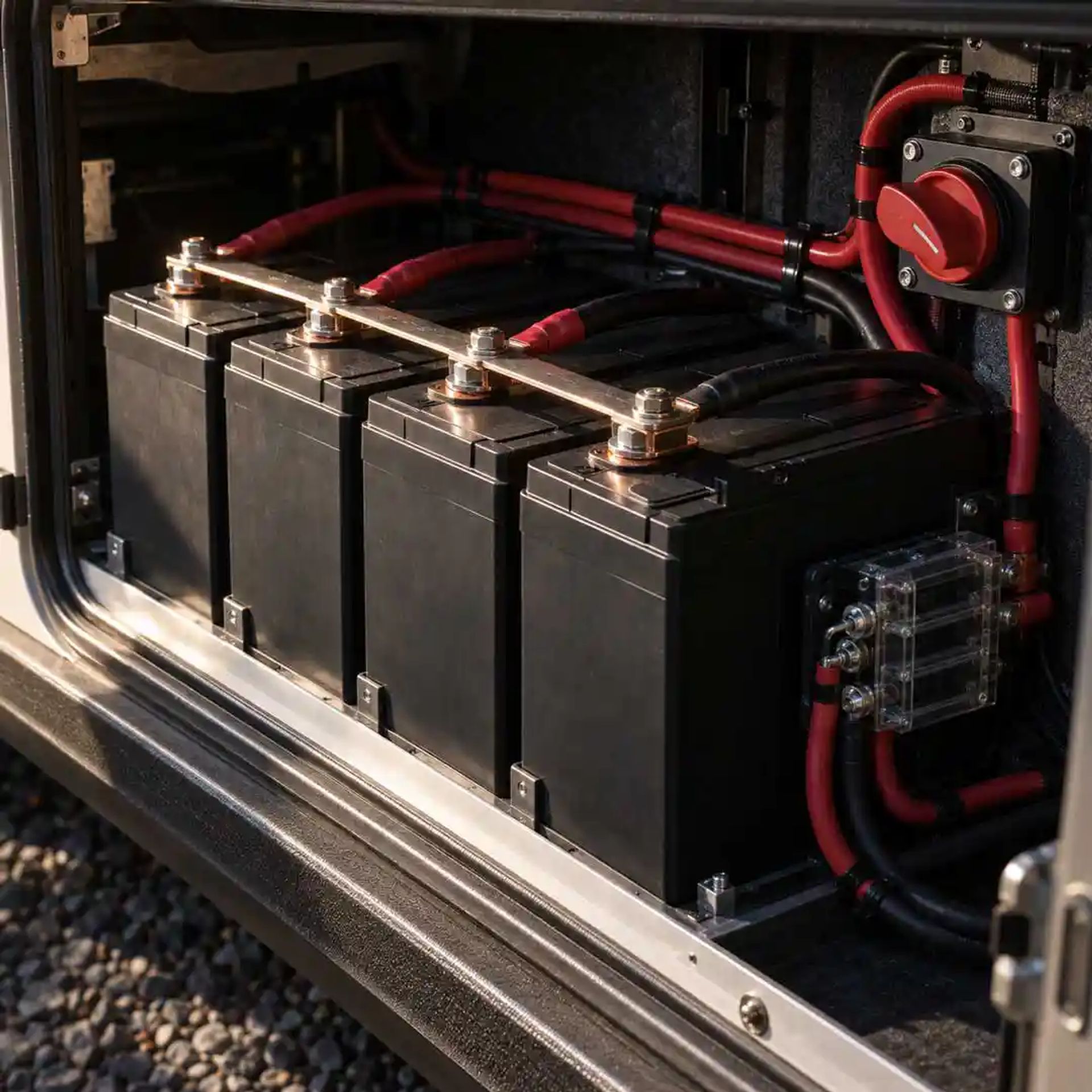
LiFePO4 lithium safely delivers 80 to 90 percent of rated capacity, with cycle life in the 2,000 to 5,000 range. A 100Ah lithium battery gives you 80 to 90Ah usable.
That means one 100Ah lithium battery provides roughly the same usable energy as two 100Ah AGM batteries. The weight difference is even more dramatic. Lithium runs about 13 to 15 pounds per 100Ah while AGM runs 60 to 70 pounds. A 200Ah lithium bank weighs under 30 pounds. The same usable capacity in AGM is well over 200 pounds of lead.
Lithium costs more upfront, and standard cells cannot charge below freezing unless you buy self-heating models. For anyone boondocking regularly, it is still the clear answer.
Step 3: Run the Formula
Here is the equation:
Required Ah = (Daily watt-hours × Days of autonomy) ÷ (System voltage × Usable depth of discharge)
Days of autonomy is how long you need to run with no meaningful solar input. Plan for two to three days. That covers a stretch of heavy overcast, a shaded site under trees, or a run of short winter days.
Worked Example One: The Weekend Camper
Lights, a vent fan, phone charging, a water pump, and a 12V fridge. Daily consumption around 800 watt-hours. Two days of autonomy.
Lithium at 80 percent: (800 × 2) ÷ (12 × 0.8) = 167Ah. Round up to a 200Ah lithium bank.
AGM at 50 percent: (800 × 2) ÷ (12 × 0.5) = 267Ah. Round up to 300Ah, which is roughly 200 pounds of batteries.
Worked Example Two: The Full-Time Remote Worker
Fridge, lights, fans, two laptops, Starlink, water pump, and occasional furnace. Daily consumption around 1,800 watt-hours. Three days of autonomy.
Lithium at 80 percent: (1,800 × 3) ÷ (12 × 0.8) = 563Ah. Round up to 600Ah.
That is a serious bank, and it is genuinely what remote work off grid requires. If that number is out of reach, the answer is to reduce consumption, add solar, or plan on sites with shore power rather than pretending a 200Ah bank will do the job.
Our article on Starlink for RVers covers the connectivity side of this equation in detail, including why the Mini is dramatically easier to power than the standard dish.
Sizing Solar to Match
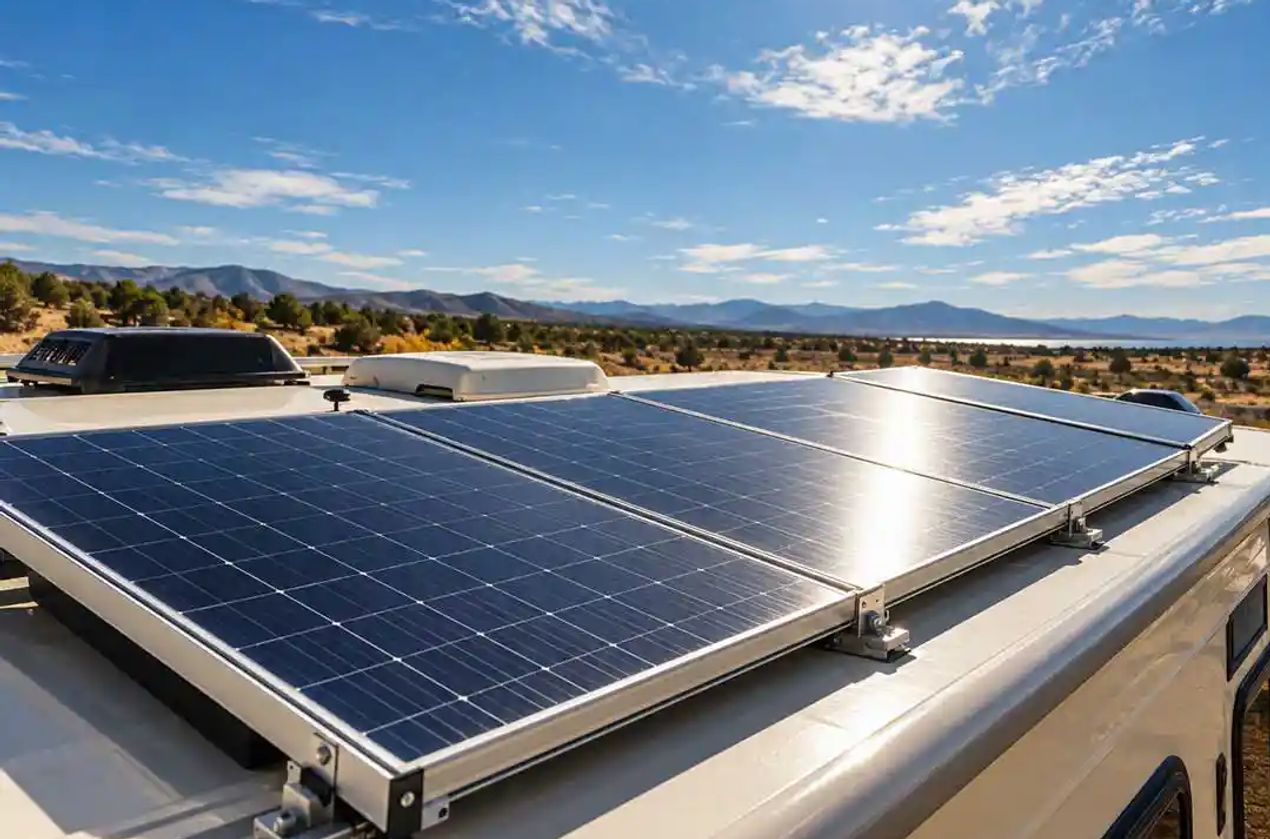
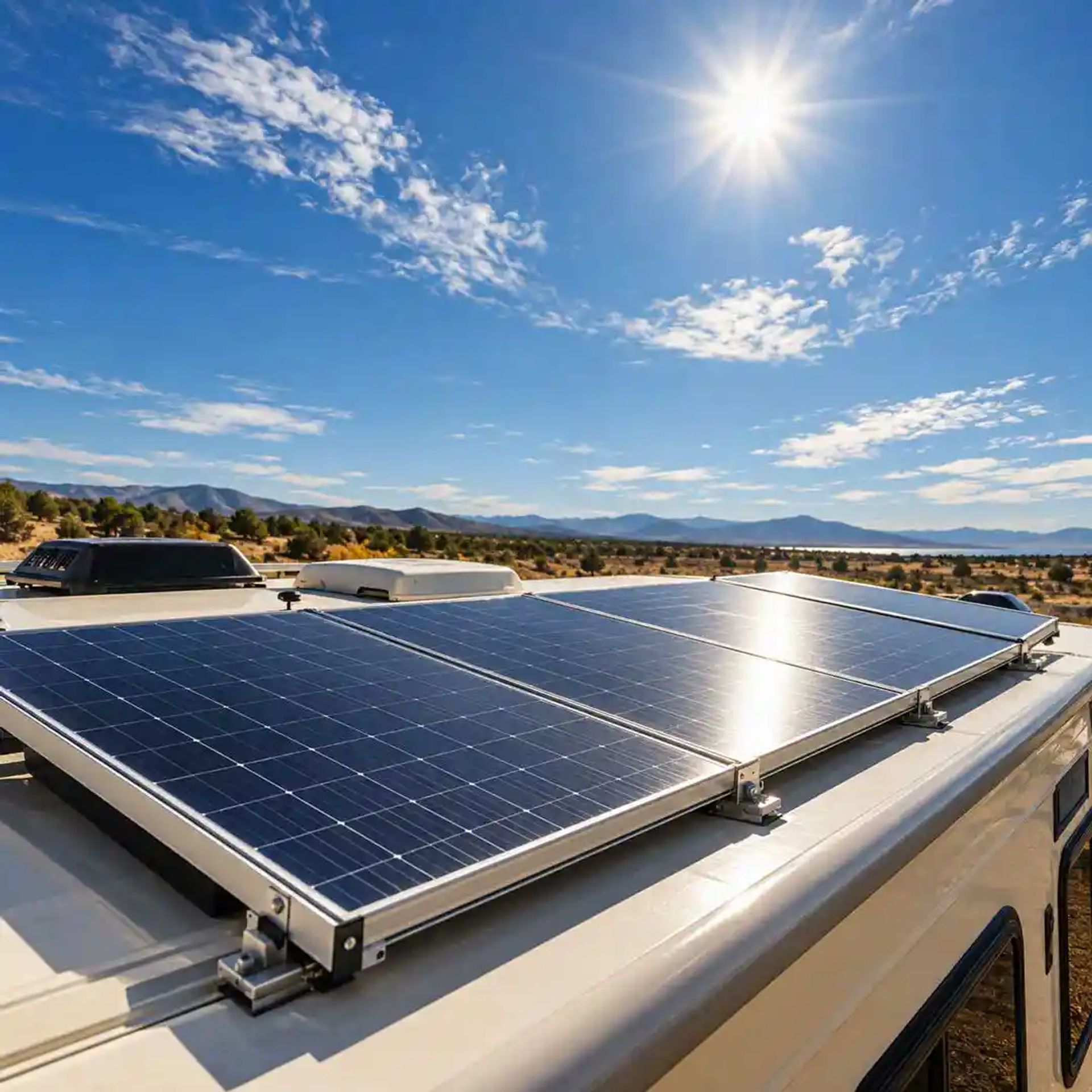
A battery bank without enough charging is just a slower way to run out of power. A reasonable planning guideline is 200 to 300 watts of solar per 100Ah of lithium capacity.
So a 200Ah lithium bank wants roughly 400 to 600 watts of panel. A 600Ah bank wants 1,200 to 1,800 watts, which is more roof than many rigs have, which is why serious full-timers often add portable panels or lean on a DC-to-DC charger while driving.
Speaking of which, a DC-to-DC charger in the 20 to 40 amp range pulls a meaningful charge off your alternator on travel days. A 40 amp unit over four hours of driving puts roughly 160Ah into the bank, which covers a lot of ground.
The Mistakes That Cost People Money
Sizing for a perfect solar day. Your panels will not hit rated output. Clouds, tree cover, panel angle, and winter sun all cut it down. Size the battery for the night, then size solar to refill it.
Mixing batteries. Always wire identical batteries together. Same capacity, same chemistry, same brand, same age. Mixing old and new or different types drags the whole bank down to the weakest unit.
Forgetting the furnace. In shoulder season, a propane furnace blower can be the single largest draw in the rig. People size their bank in July and get a nasty surprise in October.
Adding solar to fix a night problem. If you start the evening at full charge and hit empty by morning, your bank is too small. No amount of daytime charging fixes that. More panels only help if your days are the limitation.
Skipping the monitor. Without a shunt monitor you are guessing at both your consumption and your state of charge. Every other number in this article depends on knowing your real draw.
The Practical Alternative Worth Knowing
Here is the thing nobody selling batteries will tell you. Sometimes the cheapest solution to a power problem is not a bigger bank.
A 600Ah lithium system with matching solar can run well past ten thousand dollars installed. Meanwhile, booking a private land site with 30 or 50 amp shore power for a few nights costs a fraction of that and eliminates the problem entirely for the duration of your stay.
Plenty of experienced travelers run a modest 200Ah bank and simply plan their routes around periodic hookup stays. They boondock when conditions are good, then book a site with power when they need to work a heavy week, run the air conditioning, or recover from a stretch of overcast. Our article on boondocking versus moochdocking versus private land stays breaks down when each approach makes sense.
Many CurbNTurf hosts offer shore power, and our guide on decoding power, water, and connectivity explains exactly what each amenity listing means so you can filter for the amperage you need.
Run Your Own Numbers
Do the audit. Get the monitor. Run the formula. Then decide honestly whether the bank you need is worth building, or whether a smaller system plus strategic hookup stays gets you there for less money.
Open the CurbNTurf map and filter for properties with the power you need. If it is your first booking, our step-by-step guide walks through the process.
Keep Reading
- Power, Water, or Peace? Decoding Your Perfect CurbNTurf Connection to filter listings by the amperage you need.
- Master Hot-Weather RVing Without Hookups for cutting consumption when it is hot.
- Starlink for RVers: Is It Worth It at Off-Grid Sites? for the connectivity power budget.
- Boondocking vs. Moochdocking vs. CurbNTurf for choosing the right camping style.
- Beyond the Crowded Campgrounds: Your First CurbNTurf Booking Guide to book your first stay with confidence.