
Thanksgiving on the Road: Cooking a Full Holiday Meal in Your RV




Room to Roam is your guide to RV travel adventures off the beaten path. Learn how to turn your land into a money-making opportunity by hosting RVers seeking unique, off-grid escapes. Get tips on RV hosting, chat with fellow hosts and RVers, and discover the latest on RV life from the CurbNTurf community.
Popular articles

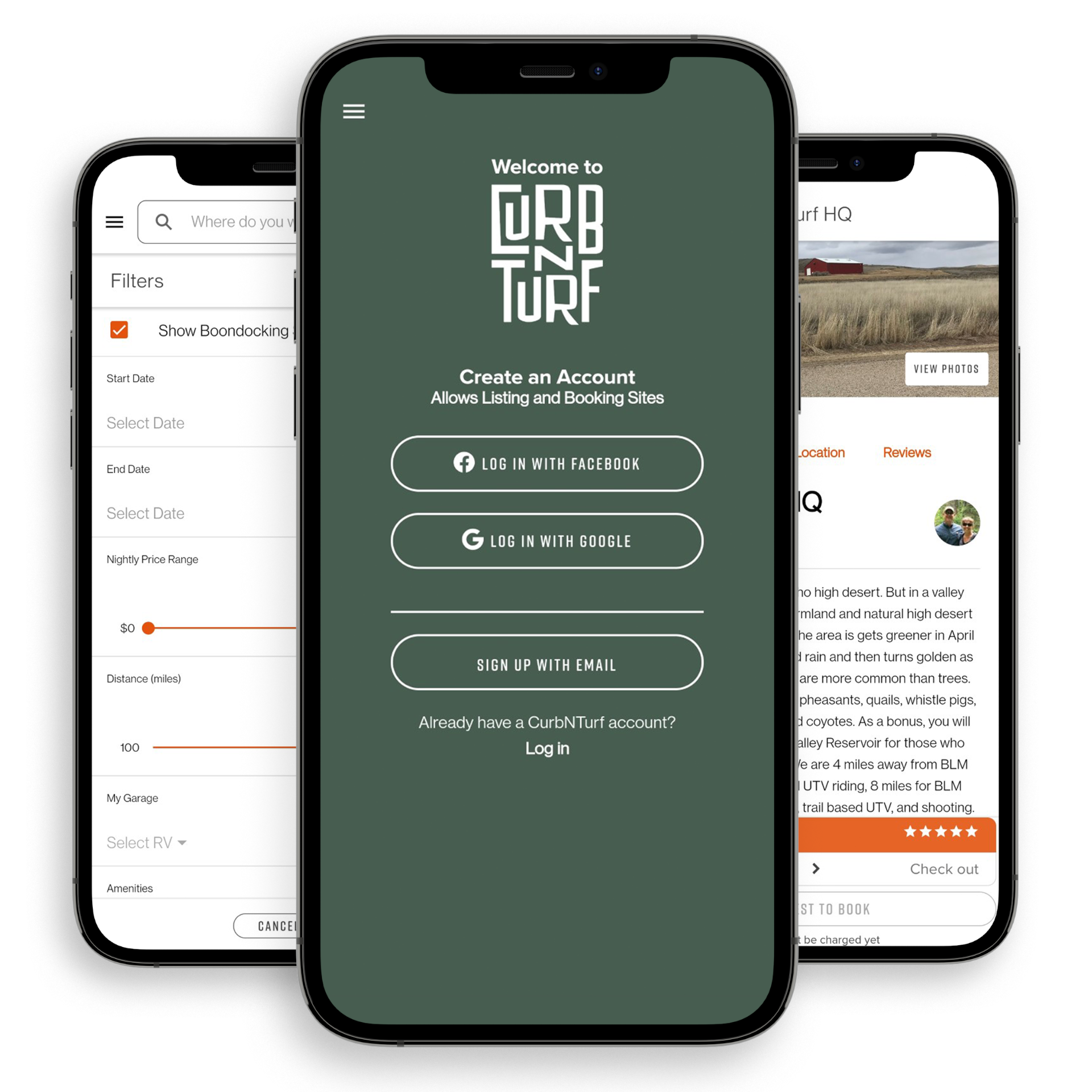
FREE TO DOWNLOAD, FREE TO USE.


Hey there, fellow traveler! Thanksgiving falls on Thursday, November 26 this year, which gives you a little over three weeks to figure out how a full holiday dinner comes out of a kitchen roughly the size of a hallway closet.
It is absolutely doable, and plenty of RVers pull it off every year. But what stops people is almost never cooking skill. It is two hard physical limits: how much space is actually inside your oven, and how many watts and how much propane you have to work with. Get honest about both numbers now and the rest of the meal plans itself.
Start by Measuring Your Oven
Before you buy a single thing, open your oven and put a tape measure in it.
Most RV ovens run about 17 inches wide and 17 inches deep, with interior height between 17 and 21 inches. Smaller trailers and vans come in under that, and a common complaint is that any pan longer than 13 inches simply will not go in.
A standard RV oven also has no convection fan. Heat comes off a single propane burner under a metal plate at the bottom and rises straight up, which is why these ovens scorch the bottoms of things while the tops stay pale. Many owners find they need to add 25 to 50 degrees to hit the temperature they actually want. Three cheap fixes handle most of it:
Put a stone on the bottom. A pizza stone or unglazed ceramic tile on the heat shield spreads that concentrated burner heat across the whole oven floor. A 10-inch stone fits most RV ovens. Preheat it with the oven and do not block the ventilation gaps at the sides of the shield.
Buy an oven thermometer. Five dollars, and it tells you what your oven is really doing.
Preheat longer than you think. Propane ovens cycle their flame and need time to stabilize. Fifteen to twenty minutes minimum, longer in cold weather. Use light-colored metal pans rather than glass, rotate them halfway through, and move the rack up if bottoms are burning.
Give Up on the Whole Bird
This is the single decision that makes everything else easier. A 15-pound turkey is not going into most RV ovens, and trying is how Thanksgiving goes sideways at 2 p.m.
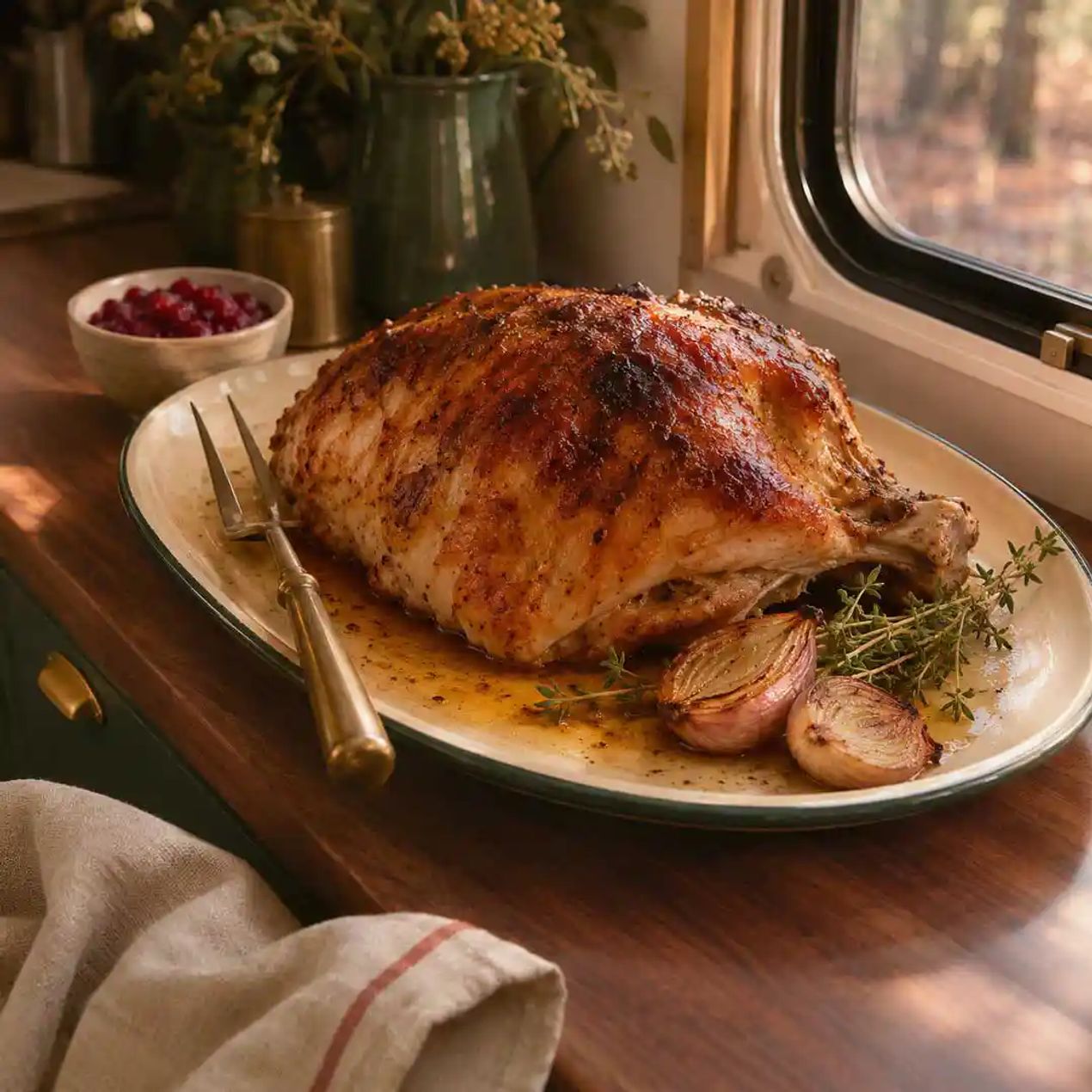
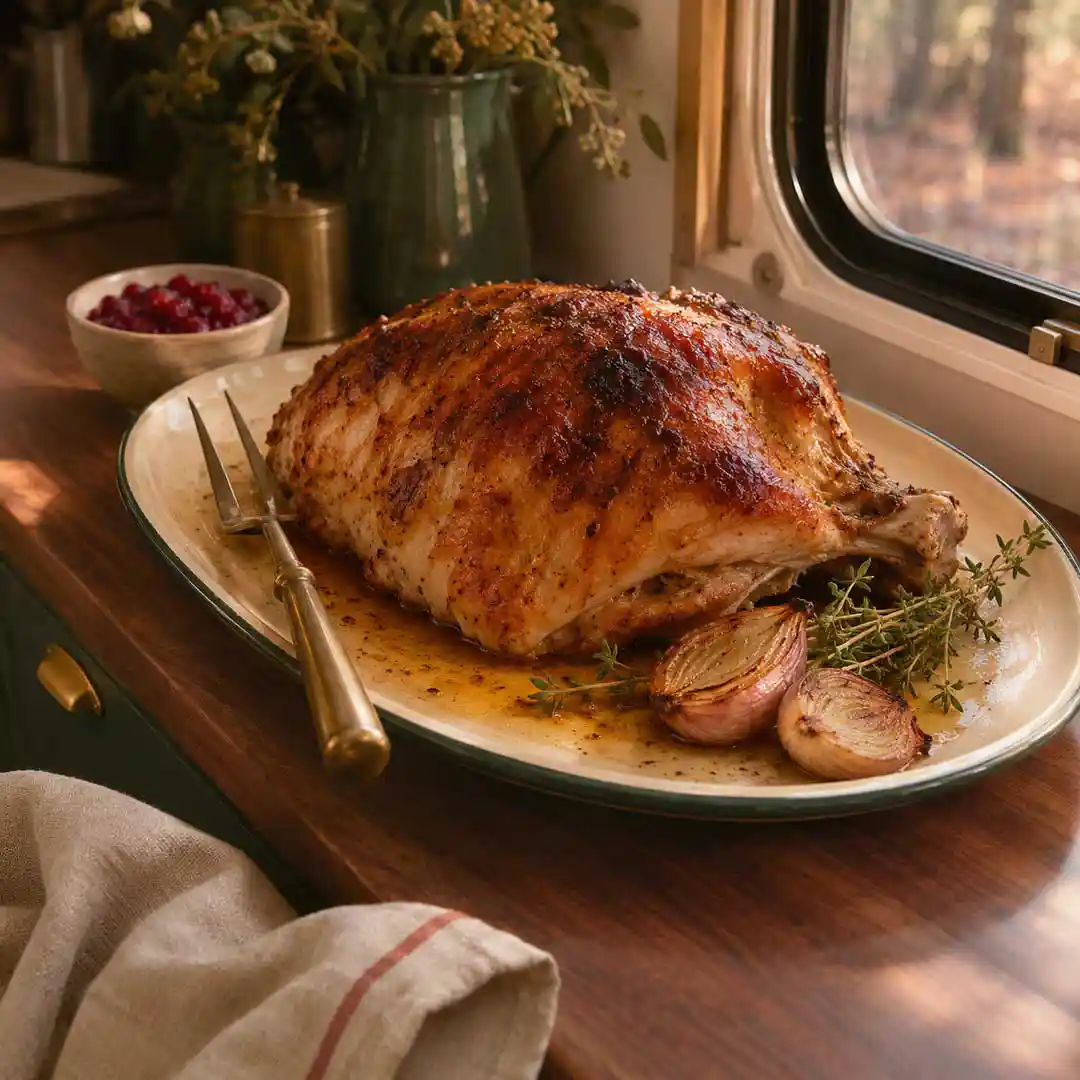
A bone-in turkey breast. A 4 to 8 pound breast roasts in 1.5 to 3.25 hours at 325 degrees. The USDA plans on about a pound of turkey per person, so a 6-pound breast covers a family.
A spatchcocked small bird. Removing the backbone and flattening the turkey drops its height dramatically and cuts cooking time. A butcher will do it for you.
Turkey thighs or a boneless roast. Both cook faster and fit anywhere.
An electric roaster. It frees your oven entirely for sides, at the cost of a serious power draw.
Whatever you cook, 325 degrees is the USDA minimum oven temperature, and the meat is done at 165 degrees measured at the thickest part of the breast and the innermost part of the thigh. Cook stuffing in a separate dish, and rest the meat 15 to 20 minutes before carving.
Run the Propane Numbers
Nobody does this math, and it is the one that actually bites.
An RV oven burns roughly a third of a gallon of propane per continuous hour. A four-hour cooking session is therefore around 1.3 gallons, and that is before your stovetop, water heater, refrigerator on gas, and furnace, which will be running plenty on a late November morning. A standard 20-pound tank holds about 4.7 gallons and a 30-pound tank about 7, so a holiday meal plus an overnight furnace cycle takes a visible bite out of one tank.
Fill up before the holiday, not during it, and know where a second tank is.
One upside: propane is the most dependable way to cook when fire restrictions are in place. County burn bans often restrict open flames and solid-fuel cooking, and charcoal and pellet grills generally are not exempt the way propane appliances are. Our guide to campfire cooking on private land covers how to check the rules for the county you are parked in.
Run the Electrical Numbers Too
On 30-amp service your entire rig has about 3,600 watts to work with, and a standard outlet is typically 15 amps, or roughly 1,800 watts. An electric roaster, an air fryer, an Instant Pot, and a microwave are each big draws, and you cannot run them simultaneously on 30 amps without tripping something. Stagger them, spread them across outlets on different circuits, and lean on your propane stovetop and oven, which cost you nothing electrically.
Fifty-amp service gives you far more room, up to about 12,000 watts across two legs, so a 50-amp site is worth seeking out if you are cooking with electric appliances. Our guide to decoding power, water, and connectivity explains how to read amperage in a listing before you book. Boondocking instead? Electric appliances are largely off the table without a substantial battery bank and inverter, and our article on sizing your battery bank runs those numbers.
The Real Answer Is the Timeline
Your oven can do one thing at a time. That is the constraint everything else bends around, and the fix is to move most of the cooking off Thursday.
A week out: finalize the menu, check fridge and freezer space, confirm your propane.
Four or five days out: shop. If you are thawing a frozen turkey breast in the refrigerator, count backward now, because thawing runs about 24 hours per 4 to 5 pounds. An 8-pound breast needs roughly two days of fridge time it will not get if you forget.
Two days out: chop vegetables, mix spice blends, make cranberry sauce.
The day before: bake pies and assemble casseroles without baking them. Highest-leverage day you have.
Thursday morning: cook the main first, then reheat sides in sequence as the oven frees up.
Mashed potatoes are the one thing better made close to mealtime, on the stovetop. For more ideas built around a small galley, our five one-pot meals from farm stand ingredients use the same logic. And the two-hour rule applies on the road as it does at home, so decide where the leftovers are going before you cook.
Where You Park Decides How Pleasant This Is
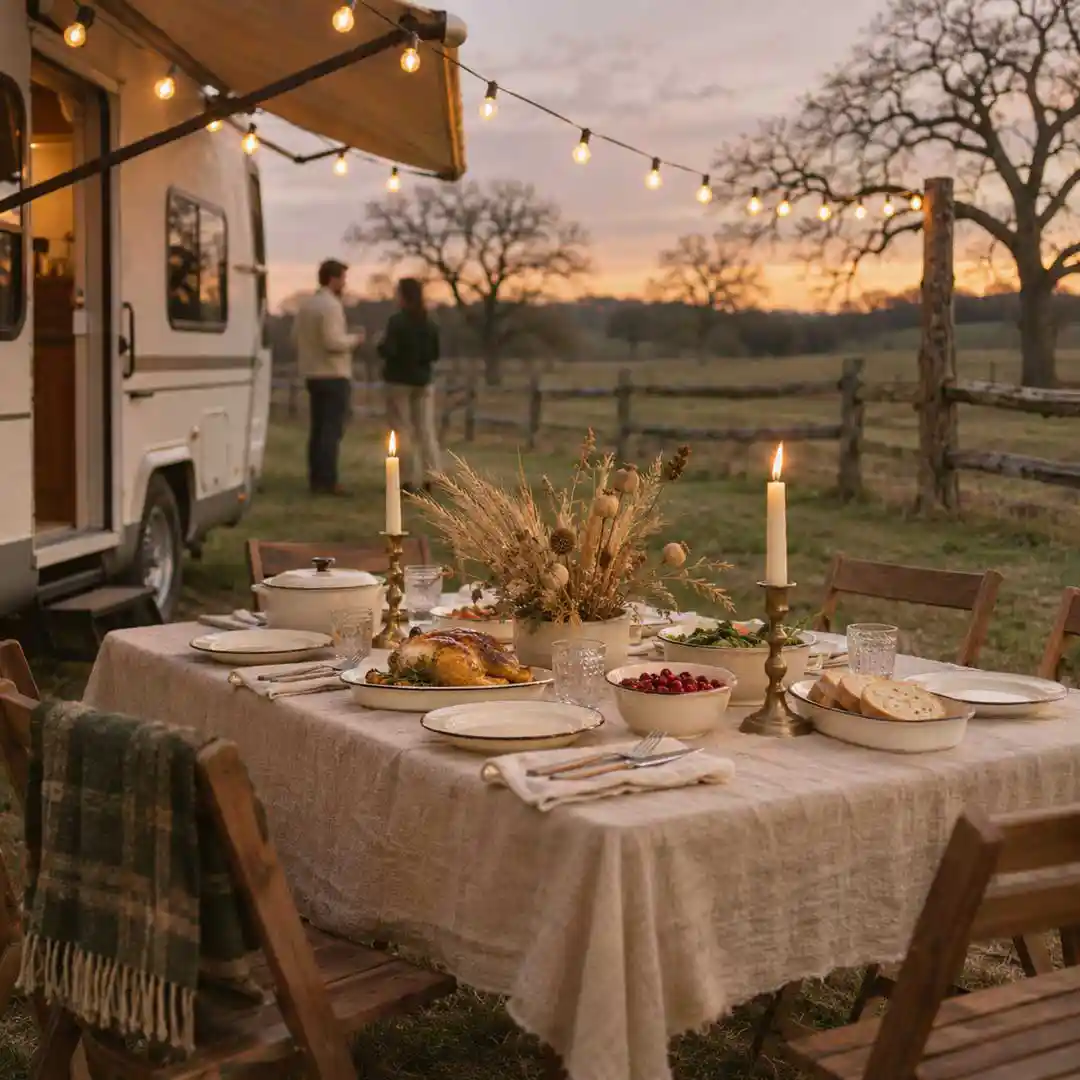
Everything above is about equipment. The part people underestimate is space. Cooking in a seven-foot galley while four people try to sit down is a different experience than cooking with a folding table outside, a grill going, and room to spread out. Thanksgiving week is also one of the busiest travel windows of the year, and commercial parks with hookups book solid well in advance.
This is where private land changes the math. CurbNTurf connects travelers with more than 500 private locations across North America, hosted by landowners rather than campground operators. That means farms, ranches, orchards, and quiet driveways where you can actually put a table outside, where your neighbor is not eight feet away, and where many hosts offer the 30 or 50-amp hookups a holiday meal benefits from.
It also means you can ask. Message a host before you book about level ground for a table, whether grilling is allowed, and the amperage on site. CurbNTurf is independent and free to join, with no annual membership fees, so you pay your host for the nights you book and nothing more.
Get the Site Before You Get the Groceries
The sequence matters. Book the site first, because that decides your power, your space, and whether you are cooking indoors or out. Then fill your propane. Then plan the menu around what your oven can physically hold.
Search CurbNTurf for Thanksgiving week now, while hosts along your route still have dates open. If this is your first booking, our step-by-step guide walks through the process.
Keep Reading