



Room to Roam is your guide to RV travel adventures off the beaten path. Learn how to turn your land into a money-making opportunity by hosting RVers seeking unique, off-grid escapes. Get tips on RV hosting, chat with fellow hosts and RVers, and discover the latest on RV life from the CurbNTurf community.
Popular articles


FREE TO DOWNLOAD, FREE TO USE.


Hey there, host! Right now, more than a million snowbirds are moving south. The early birds left in late September, the main wave is on the road through November, and the holiday rush follows in December. Many of them are looking for somewhere to park for weeks at a time rather than a night or two.
CurbNTurf stays run up to 30 nights, so that is the target. A single 30-night booking is the largest one the platform allows, and it is worth understanding how much better it is for you than the alternative before the wave passes.
Why You Want the Month, Not the Weekend
A 30-night booking is one arrival, one set of instructions, and one guest who learns where everything is in the first week and then looks after themselves. The alternative is ten three-night bookings: ten welcome messages, ten arrival windows, ten turnovers, ten chances for someone to show up at 11 p.m. in the rain.
The revenue can be comparable. The workload is not.
There is also the certainty. A month booked in October is a month you are not worrying about in January. For hosts who treat this as a real side business rather than occasional income, that predictability is the whole point.
Who You Are Actually Targeting
This is where some hosts misread the market. Not every snowbird parks in one lot in Mesa from November to April. Plenty of them move, and those are your guests.
The travelers worth courting are the ones doing a month in Arizona, then a month in south Texas, then a month in Florida. They want variety, they want to see the country they are driving through, and a 30-night cap suits their trip exactly. They are not looking for a five-month contract at a commercial resort, which is precisely why a private property with space and quiet appeals to them.
You are also well positioned for the shoulders of the season. A snowbird heading down in late October or back north in early April often needs a month somewhere pleasant before or after the main stretch. Those are easier bookings to win than deep January.
For the traveler's view of this same route, our guide to the snowbird migration from Southern California to Florida walks the corridor segment by segment.
The Mistake Almost Everyone Makes
Here is something we found while researching private stays along that corridor. Of eight properties between Southern California and Florida, only half allowed the full 30 nights. The rest capped out at six, seven, or fourteen.
Those hosts are invisible to the guests they would most want. A traveler planning a month in your region, filtering for a 30-night stay, never sees a listing with a seven-night maximum no matter how good the property is.
If your maximum is set short, ask why. Wanting the site free in February because family is visiting is a legitimate reason, and blackout dates handle that better than a permanent cap. But if the honest answer is that you picked seven nights when you created the listing and never revisited it, that is a thirty-second fix that changes which travelers can find you at all.
Your maximum stay field is the highest-leverage setting you have going into winter. Go look at it.
What Month-Long Guests Need
Long-stay guests want different things than weekend travelers.
Sewer, not just a dump station. This is the big one. A weekend guest empties tanks on the way out. Someone parked for a month cannot haul to a dump station every third day. If you have a septic connection, feature it prominently. If you do not, be upfront, because it will shape who books.
30 or 50 amp power. Snowbirds run heaters in January and air conditioning in March. A household outlet does not carry that load for a month.
A genuinely level site. A rig parked for weeks on a slope is a problem for the refrigerator, the plumbing, and the guest.
Laundry, or honest directions to it. A month of clothes. A washer guests can use is a real differentiator. If you do not have one, name the nearest laundromat.
Mail. The need hosts rarely think about and snowbirds always care about. Prescriptions, packages, documents. Even stating clearly that you cannot receive mail saves an awkward conversation later.
Proximity to groceries and medical care. Snowbirds skew older. A property forty minutes from the nearest pharmacy is a harder sell for a month than for a weekend.
Reliable connectivity. Many need to reach doctors and family, and some work remotely. Our guide on decoding power, water, and connectivity shows how guests read these amenity listings from the other side.
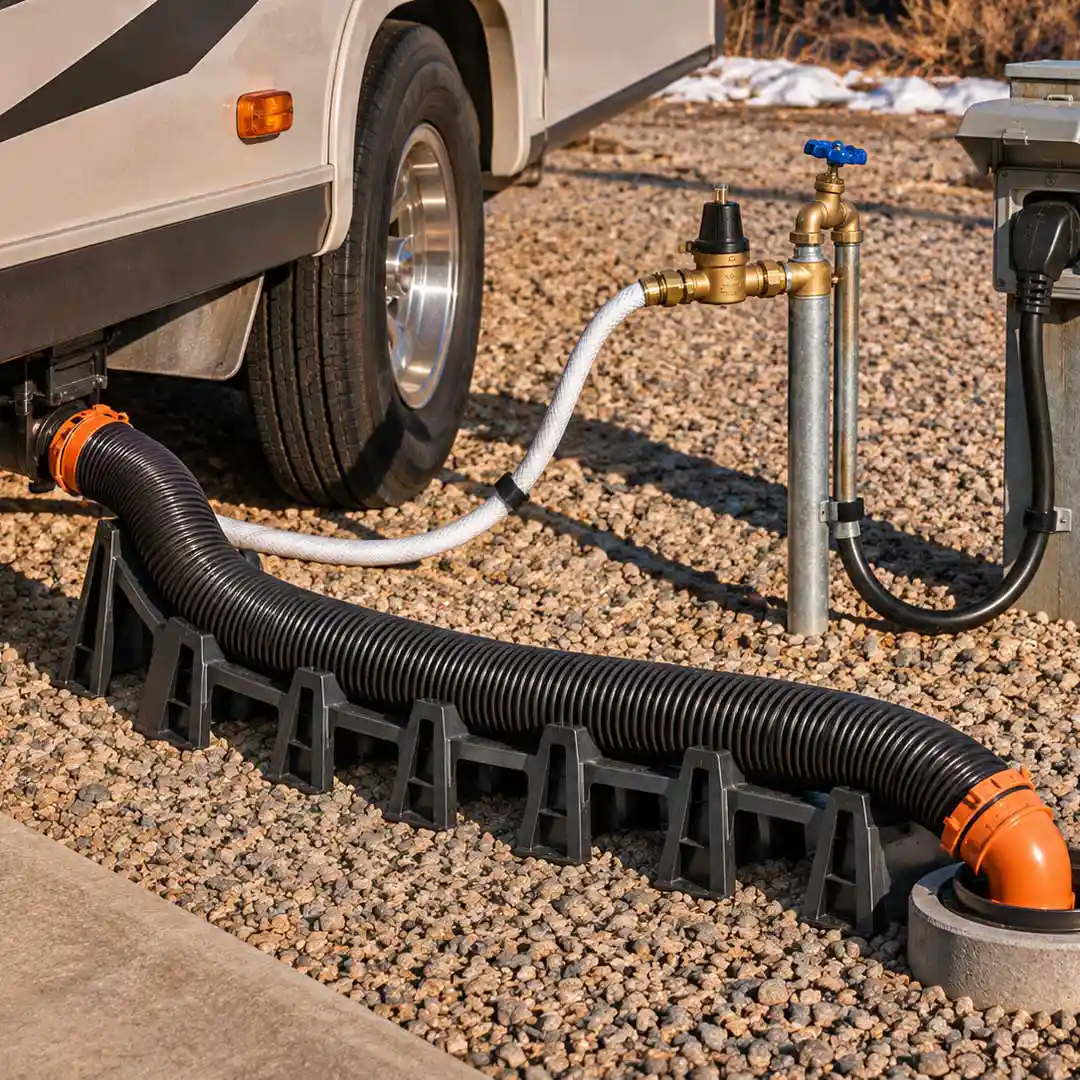
The Electricity Question
This deserves its own section because it is where hosts quietly lose money.
Commercial parks meter electricity separately on monthly stays for a reason. Winter heating and cooling can add roughly $40 to $150 per month to a site's power draw. Across a 30-night booking that is real money, and it is money you will not notice leaving until the bill arrives.
You have three reasonable options. Build an estimate into your monthly rate and accept some variance. Install a submeter and bill actual usage. Or set an allowance and charge for overage above it.
Whichever you choose, put it in your listing and repeat it in your welcome message. Snowbirds are experienced travelers who expect this conversation. What causes friction is discovering it in week three.
Pricing a 30-Night Stay
Your guest is comparing you against a commercial monthly rate, so know what those look like. Florida snowbird parks run roughly $450 to $800 per month in the Panhandle and North Florida, $500 to $900 inland in Central Florida, $900 to $1,800 on the Gulf Coast, and $1,200 to $2,500 or more in South Florida. Peak monthly rates typically sit 30 to 50 percent above the same park's summer rate, with January and February the most expensive.
Most hosts discount a long stay against their nightly rate, and that discount is what makes the booking attractive. One Gulf Coast park illustrates it: $55 per night across 30 nights totals about $1,650, while its monthly rate is $1,200, a saving near 27 percent.
A 20 to 30 percent discount off your nightly rate is a sensible starting point. You are trading per-night revenue for a filled calendar, far less turnover work, and payment certainty. Check the result against the regional bands above, because a private property with full hookups and genuine space competing against commercial parks at $500 to $900 has room to price with confidence. Our article on pricing your site covers regional benchmarks and what each amenity adds.
Sort These Out Before You Accept 30 Nights
Three things to settle before your first long booking rather than during it.
Local ordinances. Thirty days is a meaningful threshold in a lot of municipal codes, and some jurisdictions treat stays at or beyond it differently than short visits. Call your county or city and ask specifically about month-long stays rather than RV hosting in general.
Insurance. A 30-night stay may sit differently with your carrier than a weekend. Our article on liability and insurance for hosts covers what to raise with your agent.
Taxes. Stay length can affect how income is treated in some places. Our tax-smart host guide is educational rather than advice, and a conversation with a CPA before the season beats one after it.
Get Ready for the November Wave
The early birds have gone. The main wave is on the road now and the holiday rush is roughly six weeks out. Hosts who adjust this month can still catch a good share of it.
Three things worth doing today. Raise your maximum stay to 30 nights if it is artificially short, and use blackout dates for the weeks you genuinely need. Add a line to your listing covering sewer, power amperage, laundry, and mail. Decide your monthly rate and your electricity policy, and write both down.
Review your listing while travelers are still searching. CurbNTurf is independent and free to join, with no annual membership fees, so a winter booking is yours rather than a platform's.
Keep Reading
