
Winterizing Your RV: The Pre-Freeze Checklist Every Owner Needs




Room to Roam is your guide to RV travel adventures off the beaten path. Learn how to turn your land into a money-making opportunity by hosting RVers seeking unique, off-grid escapes. Get tips on RV hosting, chat with fellow hosts and RVers, and discover the latest on RV life from the CurbNTurf community.
Popular articles



FREE TO DOWNLOAD, FREE TO USE.


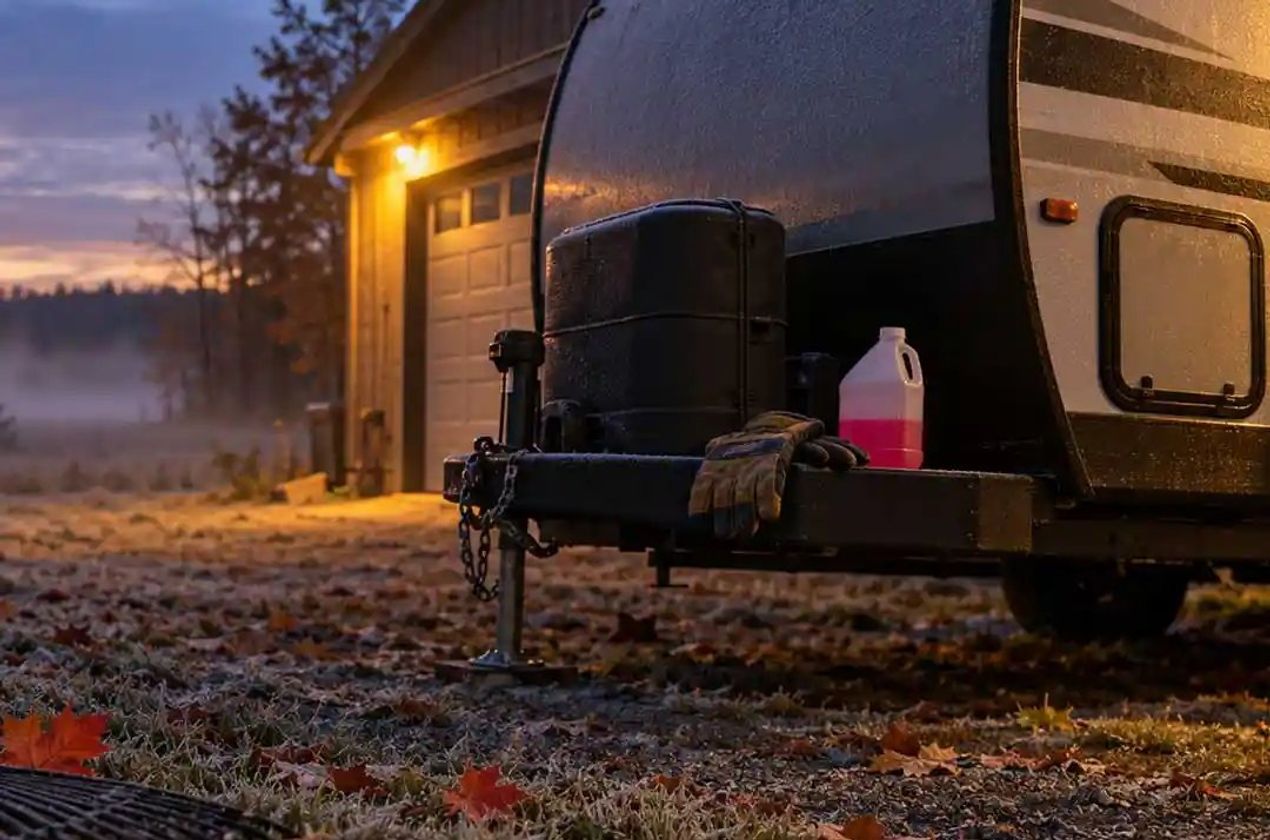
The first hard freeze is coming, and your RV is one of the biggest investments in your driveway. A single night of burst pipes can mean thousands of dollars in repairs, a ruined water heater, cracked fittings, and a spring surprise you do not want. The good news is that winterizing an RV is a weekend job, not a specialist job, and the steps have not changed much in decades.
This is your pre-freeze checklist. Work through it before overnight temperatures drop below 32 degrees Fahrenheit in your area. And if the idea of mothballing your rig for five months sounds depressing, we have a better option at the end of this article.
Step 1: Drain the Water System Completely
Water is the number one threat to a parked RV in winter. When it freezes, it expands, and it will crack anything it is sitting inside, including PEX lines, pump housings, water heater tanks, and faucets.
Start by draining all three tanks. Open the low-point drains on your fresh water system. Dump the gray and black tanks at a proper dump station, then flush the black tank thoroughly. A clean tank is a tank that does not grow surprises over the winter.
Next, drain the water heater. Make sure the unit is cool and depressurized before you remove the drain plug or anode rod. Open the pressure relief valve to help it drain faster. Never drain a hot water heater while the heating element is on.
Step 2: Blow Out the Lines or Add RV Antifreeze
You have two options here, and most owners do both for insurance.
The compressed air method uses a blow-out plug and a shop compressor set to no more than 30 to 40 PSI. Open each faucet one at a time, including the shower, the outside shower if you have one, and the toilet, and let the air push the remaining water out until nothing but air comes through.
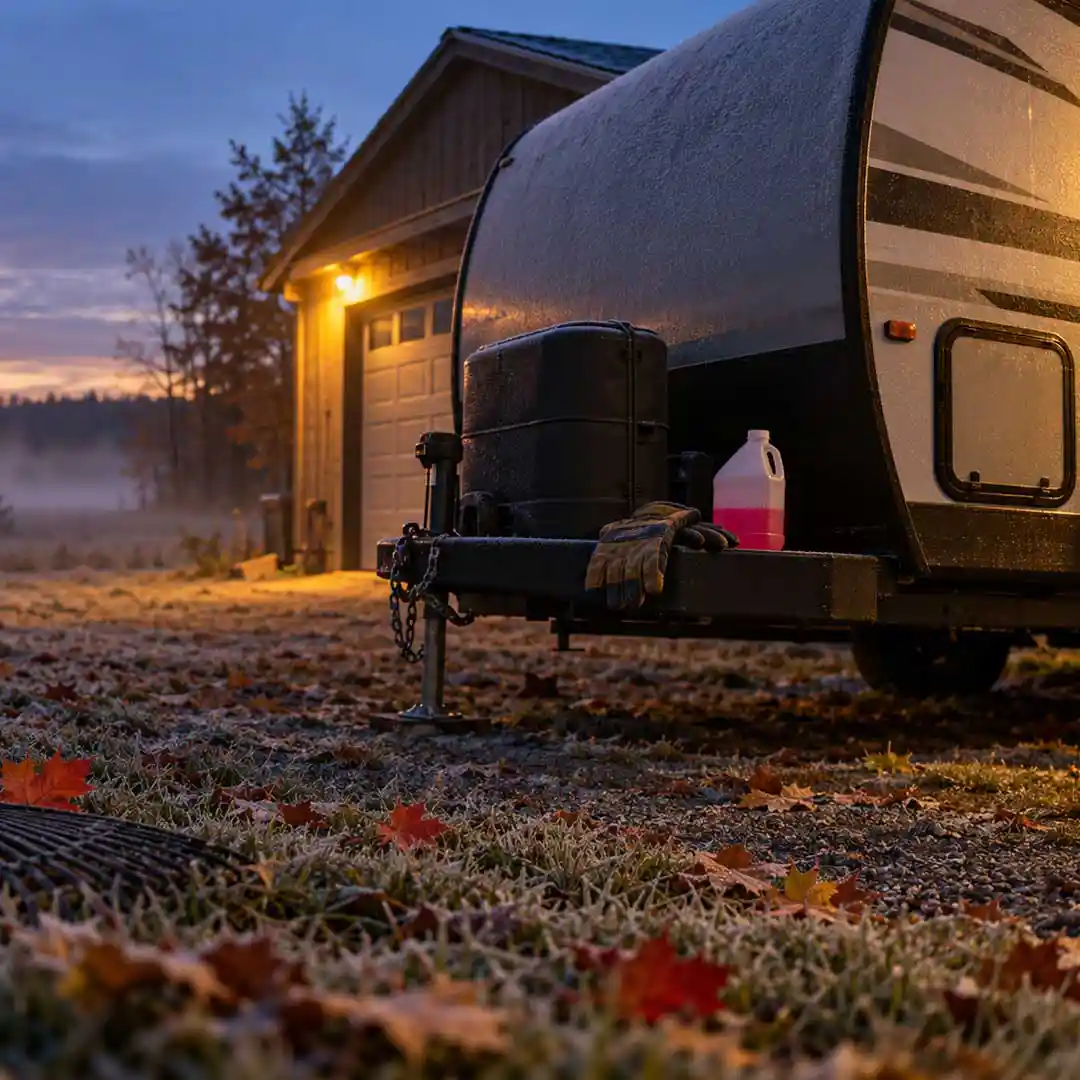
The antifreeze method uses non-toxic pink RV antifreeze, never automotive antifreeze. Bypass the water heater with the built-in bypass valves, connect the water pump to a jug of RV antifreeze, and run the pump until pink fluid comes out of every faucet, hot and cold, including the toilet and the outside shower. Pour a cup of antifreeze down each drain to protect the P-traps.
Most RV owners use roughly two to three gallons of antifreeze for a typical travel trailer or Class C.
Step 3: Battery Care
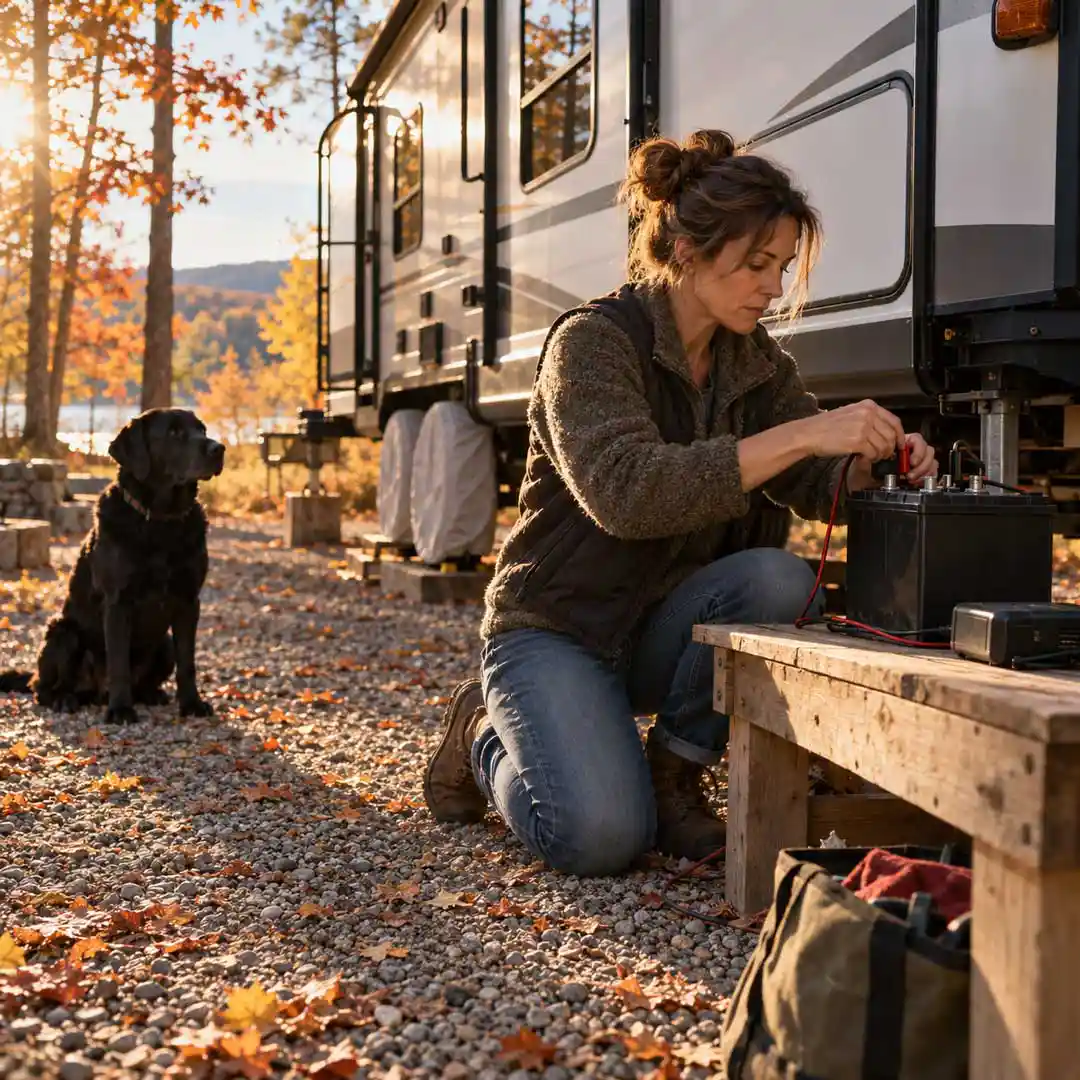
Lead-acid and lithium batteries both hate being left in a discharged state through a cold winter. A discharged lead-acid battery can freeze and crack its case. A lithium battery left at a low state of charge for months can suffer permanent capacity loss.
Disconnect the batteries from the RV to prevent parasitic draws from clocks, propane detectors, and stereo memory. If you can bring them inside to a climate-controlled space, do it. Otherwise, hook them to a smart maintainer that will keep them topped off without overcharging.
Lithium batteries have their own rules. Check your manufacturer’s cold storage guidance. Most prefer to be stored at roughly 50 percent charge in temperatures above freezing.
Step 4: Tires, Jacks, and Exterior
Tires lose air in cold weather and develop flat spots when parked for long periods. Inflate to the pressure listed on the sidewall for storage, not the pressure you run while driving. Chock the wheels on both sides so the rig does not shift. Place tire covers over the sidewalls to block UV damage.
If you can lift the weight off the tires with leveling jacks or jack stands, do it. Four to five months on one spot is hard on sidewalls.
Inspect every roof seam, window frame, slide-out seal, and vent gasket. Winter is when small cracks become big leaks. A tube of self-leveling sealant on the roof and non-leveling sealant on the sidewalls costs about $10 each and prevents hundreds of dollars in water damage.
If you have slide-outs, lubricate the seals with a slide-out conditioner and decide whether to store with them in or out. The owner’s manual for your specific rig is the right source for that call.
Step 5: Interior, Pests, and Moisture
An empty RV in winter is a perfect home for mice. They can squeeze through a hole the size of a dime, they will chew wiring, and they will nest in your mattress.
Remove all food, including anything in sealed boxes. Mice can smell through cardboard. Leave cabinet doors and drawers open so air can circulate. Place moisture absorbers like DampRid in the kitchen, bathroom, and bedroom. A small dehumidifier plugged into shore power works even better if you have access to electricity.
For pests, steel wool stuffed into every exterior penetration (the fridge vent, the propane line entry, the furnace exhaust) is cheap and effective. Peppermint oil on cotton balls is popular, though opinions vary on how well it works.
Prop open the refrigerator and freezer doors to prevent mold. Clean out any crumbs around the stove and under the dinette cushions.
Step 6: Propane, Fuel, and Generator
Turn off the propane at the tank. If your RV will sit for more than two months, add a fuel stabilizer like Sta-Bil to the gas tank and run the engine for 15 minutes to circulate it through the fuel system. The same goes for your onboard generator. Change the oil and filter before storage if you are close to the service interval.
Step 7: Cover and Document
A breathable, RV-specific cover protects against UV and precipitation while letting moisture escape. Avoid plastic tarps, which trap condensation and promote mold. Take photos of the RV before you cover it so you have a reference for your insurance in case of theft or storm damage.
The Better Option: Skip Winter Entirely
Here is the alternative that CurbNTurf exists to make easy. Instead of winterizing your rig and parking it in the driveway for five months, drive it south and keep using it.
CurbNTurf is a community-based platform that connects RV travelers with private landowners across North America. Our listings range from Florida citrus groves and Gulf Coast farms to Texas Hill Country ranches and Arizona desert properties, exactly the kind of destinations snowbirds have been chasing for decades. The CurbNTurf app is free to download on the App Store and Google Play. There is no annual membership fee, no corporate middleman, and no gatekeeping between you and the listings. You pay for the stays you book and nothing else.
For longer winter stays, many hosts offer extended-stay rates for one week, one month, or an entire season. You can filter by hookups, rig size, pet policies, and amenities. You can message the host directly before you book. And you can mix destinations, a week on a vineyard, two weeks on a working farm, a month in a quiet lot near the beach, in a way that no fixed campground can match.
Spring Is Easier When You Plan Now
Whichever route you choose, winterize or migrate, the next few weeks are the time to act. If you are mothballing your rig, work through the checklist above before the first hard freeze. If you are heading south, start searching CurbNTurf listings now while the best winter spots still have availability.
Wilderness within reach, even in January.
Visit curbnturf.com to browse winter stays, or download the free app and start planning your snowbird season today.