
Campfire Cooking on Private Land: What's Allowed, What's Not




Room to Roam is your guide to RV travel adventures off the beaten path. Learn how to turn your land into a money-making opportunity by hosting RVers seeking unique, off-grid escapes. Get tips on RV hosting, chat with fellow hosts and RVers, and discover the latest on RV life from the CurbNTurf community.
Popular articles

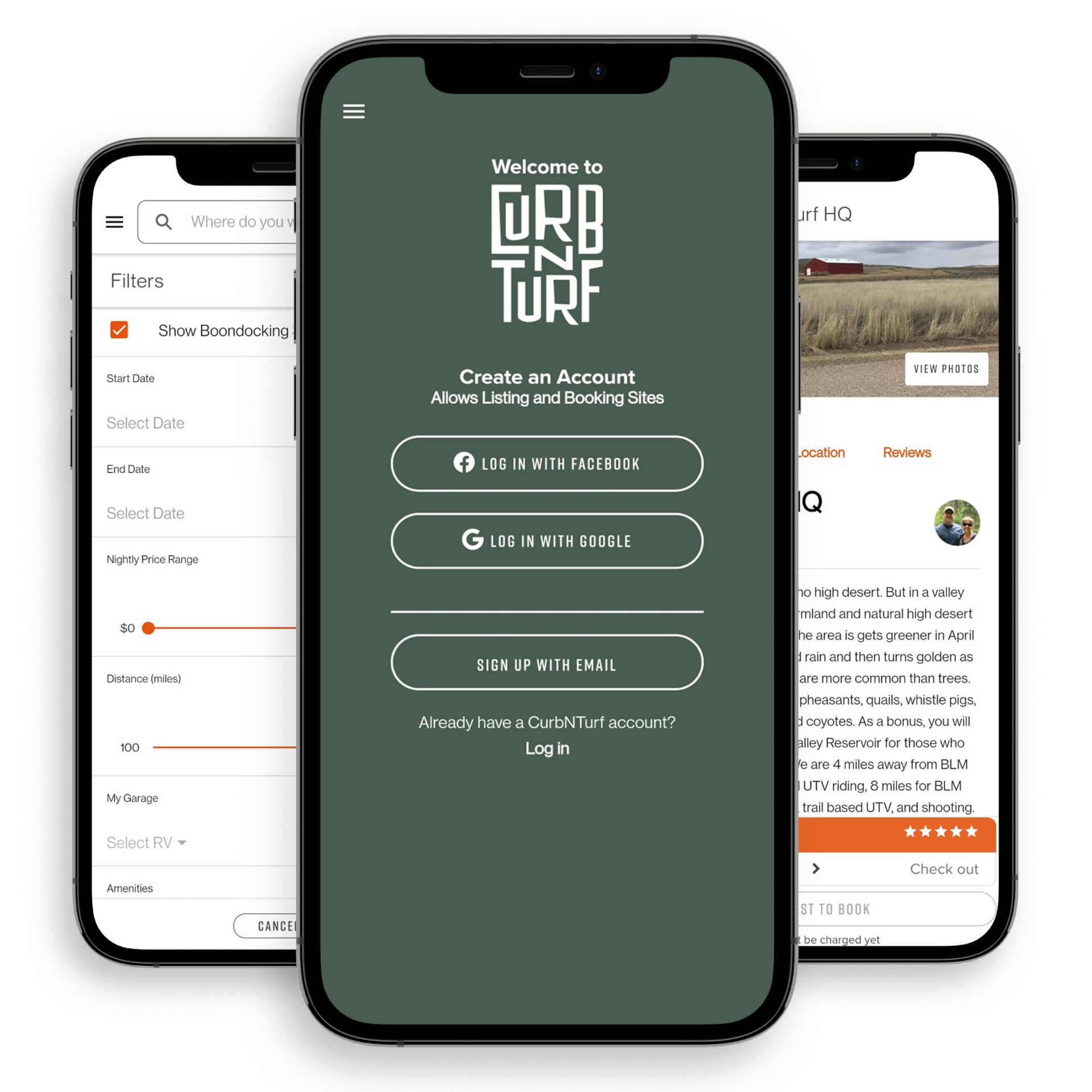
FREE TO DOWNLOAD, FREE TO USE.


Hey there, fellow traveler! Few things beat cooking dinner over a fire at the end of a good driving day. But campfire rules are genuinely confusing, and most of the guidance you find online is written for national forest and BLM campers. Private land works differently, and getting it wrong can mean a citation, a liability problem, or in the worst case a wildfire you started.
Here is a clear breakdown of who actually sets the rules on private property, what the restriction stages mean, and the mistakes that get people fined most often.
The Three Layers That Govern Your Fire
On a CurbNTurf stay, three separate sets of rules stack on top of each other. All three have to say yes.
Layer one: government restrictions. This is where most travelers get confused. The Stage 1, 2, and 3 system you have probably heard of is used by federal land managers like the Forest Service, BLM, and Park Service on their own land, and by many state agencies. On private property, the rules that actually bind you are usually a county burn ban issued by county commissioners or a fire marshal, plus any state forestry rules and local fire district orders. County burn bans are specifically the ones that most affect private landowners and their guests.
These authorities operate independently and often overlap. The campfire rules can genuinely change from one side of a county line to the other. Never assume that because a nearby national forest is open, the county you are camped in is.
Layer two: your host's rules. Even when the county allows fires, your host may not. That is entirely their call, and it is usually a well-reasoned one. A host with dry pasture, standing hay, livestock, outbuildings, or a well pump has real reasons to say no fires. Their rules are in the listing and should be confirmed on arrival.
Layer three: conditions on the day. Legal and permitted does not mean wise. A Red Flag Warning from the National Weather Service means critical fire weather, typically low humidity combined with wind, where any new fire can spread fast. If one is in effect, skip the fire regardless of what the rules technically allow.
What the Restriction Stages Actually Mean
Even though the stage system is a public-land framework, many state and county orders borrow its language, so it is worth knowing.
No restrictions. Fires are generally permitted in appropriate containment, following local rules.
Stage 1. Campfires are prohibited except within permanent, agency-provided fire rings at developed sites. Charcoal and wood fires are generally prohibited outside those areas. Smoking is restricted to enclosed vehicles, buildings, or an area cleared three feet in diameter. Gas and liquid-fuel stoves with a shutoff valve are typically still permitted.
Stage 2. Everything in Stage 1, plus no campfires at all, even in developed sites. Internal combustion equipment is restricted off designated roads, and welding and torch use is prohibited. Some Stage 2 orders also restrict propane devices, so read the specific order rather than assuming.
Stage 3. Any outdoor flame is prohibited, even in approved devices, and the area may be closed to public access entirely.
The Four Mistakes That Get People Cited
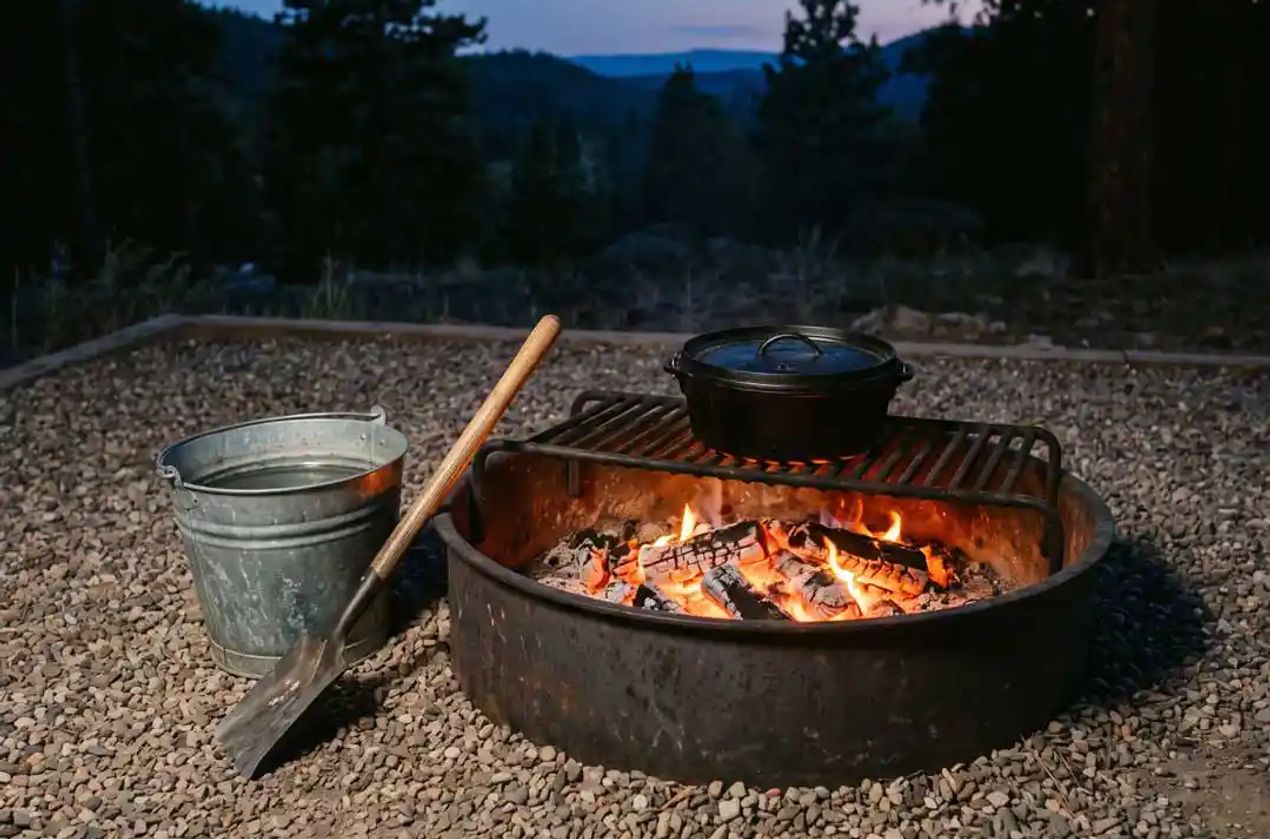
Assuming a rock ring or fire pan counts as a designated fire ring. It does not. Under Stage 1 language, only permanent metal or concrete fire structures installed and maintained by the managing agency qualify. A ring of rocks you built and a portable fire pan you brought are both still prohibited.
Assuming charcoal is exempt like propane. It is not. Charcoal grills are generally banned outside developed areas under Stage 1 and banned entirely under Stage 2. People assume a charcoal grill gets treated like a gas grill and it does not.
Assuming a pellet grill is exempt because it has a switch. Pellet grills and smokers burn solid wood pellets that throw embers. They get regulated like charcoal, not like propane. The electric ignition does not change the fuel.
Ignoring the hours in an order. Some restrictions permit propane devices only during specific windows, often evening through morning when humidity is higher and winds are calmer. Using a device outside those hours is a violation even though the device itself is compliant.
Propane Is Usually Your Safest Bet
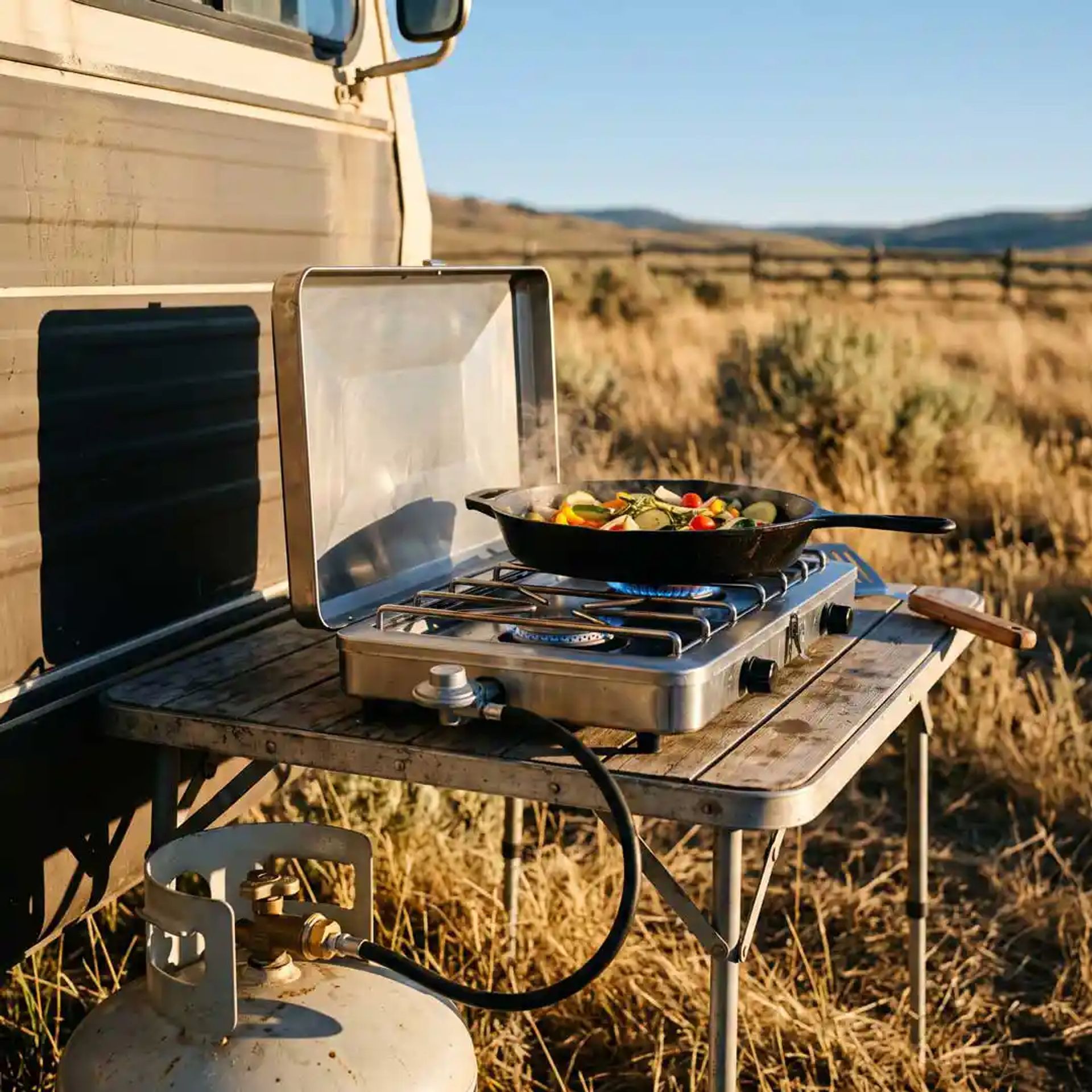
If you want reliable outdoor cooking that works across the widest range of conditions, propane is the answer. Gas devices with an accessible on and off valve are typically permitted under both Stage 1 and many Stage 2 orders, precisely because they can be shut off instantly and produce no embers.
That said, it is not universal. Some Stage 2 orders and certain parks restrict propane fire pits too, and some BLM river corridor restrictions prohibit portable propane campfires along with everything else. Confirm the specific order's device language rather than relying on the general rule.
A propane fire pit is worth carrying if you travel through dry regions in summer. It gives you the fire experience with a shutoff valve, no ash, and no sparks. Keep the valve accessible and never leave it burning unattended.
Cooking Well Within the Rules
The good news is that campfire cooking and one-pot cooking overlap almost completely, and most of the best RV meals work on a propane stove, a camp stove, or over coals equally well. Our article on one-pot meals using ingredients from your host's farm stand has five recipes that work on any heat source, which matters when you arrive and discover a burn ban went into effect that morning.
A cast iron Dutch oven and a skillet cover nearly everything. If fires are permitted, cook over a settled bed of coals rather than active flame, since coals give you steady controllable heat instead of scorching the outside while the inside stays raw.
Practical Steps Before Your Stay
Check the county, not just the region. Search for the current burn ban status in the specific county where the property sits. Many counties post this on their sheriff or emergency management page and update it frequently.
Read the listing carefully. Fire rules should be stated in the property description. If they are not clear, message the host before booking. Our guide on decoding power, water, and connectivity covers reading a listing thoroughly.
Ask on arrival. Conditions change fast in summer. A ban can be issued between your booking and your stay. Confirm with your host when you get there.
Bring a backup. A propane stove or a propane fire pit means a burn ban does not ruin your dinner plans.
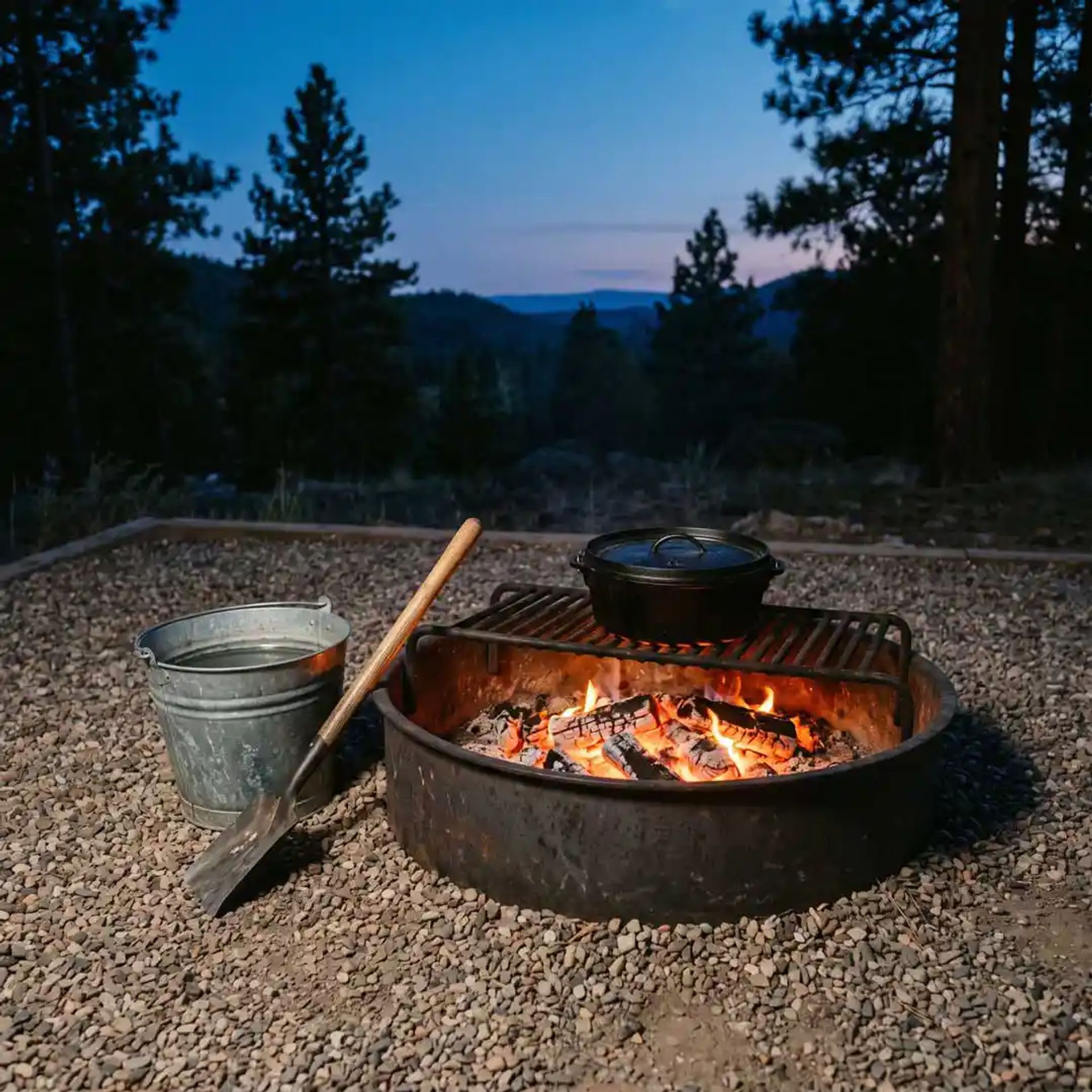
Have water and a shovel ready. If you do have a fire, keep a filled bucket and a shovel within arm's reach. Drown the fire, stir the ashes, and drown it again until it is cold to the touch before you sleep or leave.
Never leave it unattended. Not for five minutes. Most escaped fires start from a fire someone believed was out.
Why Hosts Care So Much About This
Worth understanding the other side. Your host's property is usually their home, sometimes their livelihood, and often uninsured against the specific risk of a guest-caused fire. Our article on liability and insurance for CurbNTurf hosts covers why coverage in this area is complicated for landowners.
When a host says no fires, they are protecting a barn, a hayfield, a herd, or a house. Respecting that without argument is the single easiest way to be the kind of guest who gets invited back and gets a great review.
Ready to Plan Your Next Stay?
Cooking outdoors is one of the best parts of RV travel, and private land is one of the best places to do it. Just know the rules before you strike a match.
Open the CurbNTurf map, find a property in the region you want, read the fire policy in the listing, and message the host with any questions before you book. If this is your first stay, our step-by-step booking guide walks through the process.
Keep Reading
- 5 One-Pot Meals Using Ingredients from Your Host's Farm Stand for recipes that work on any heat source.
- Power, Water, or Peace? Decoding Your Perfect CurbNTurf Connection to read a listing thoroughly before booking.
- Master Hot-Weather RVing Without Hookups for staying comfortable when it is hot and dry.
- Beyond the Crowded Campgrounds: Your First CurbNTurf Booking Guide to book your first stay with confidence.
- Liability and Insurance 101 for CurbNTurf Hosts to understand the host perspective on fire risk.
Fire restrictions change frequently and vary by jurisdiction. This article is general information and is not a substitute for checking the current, official restriction status with the county, state, and local fire authority covering your specific location before you build any fire.