
Pet-Friendly Hosting: Why Allowing Dogs Could Double Your Bookings




Room to Roam is your guide to RV travel adventures off the beaten path. Learn how to turn your land into a money-making opportunity by hosting RVers seeking unique, off-grid escapes. Get tips on RV hosting, chat with fellow hosts and RVers, and discover the latest on RV life from the CurbNTurf community.
Popular articles

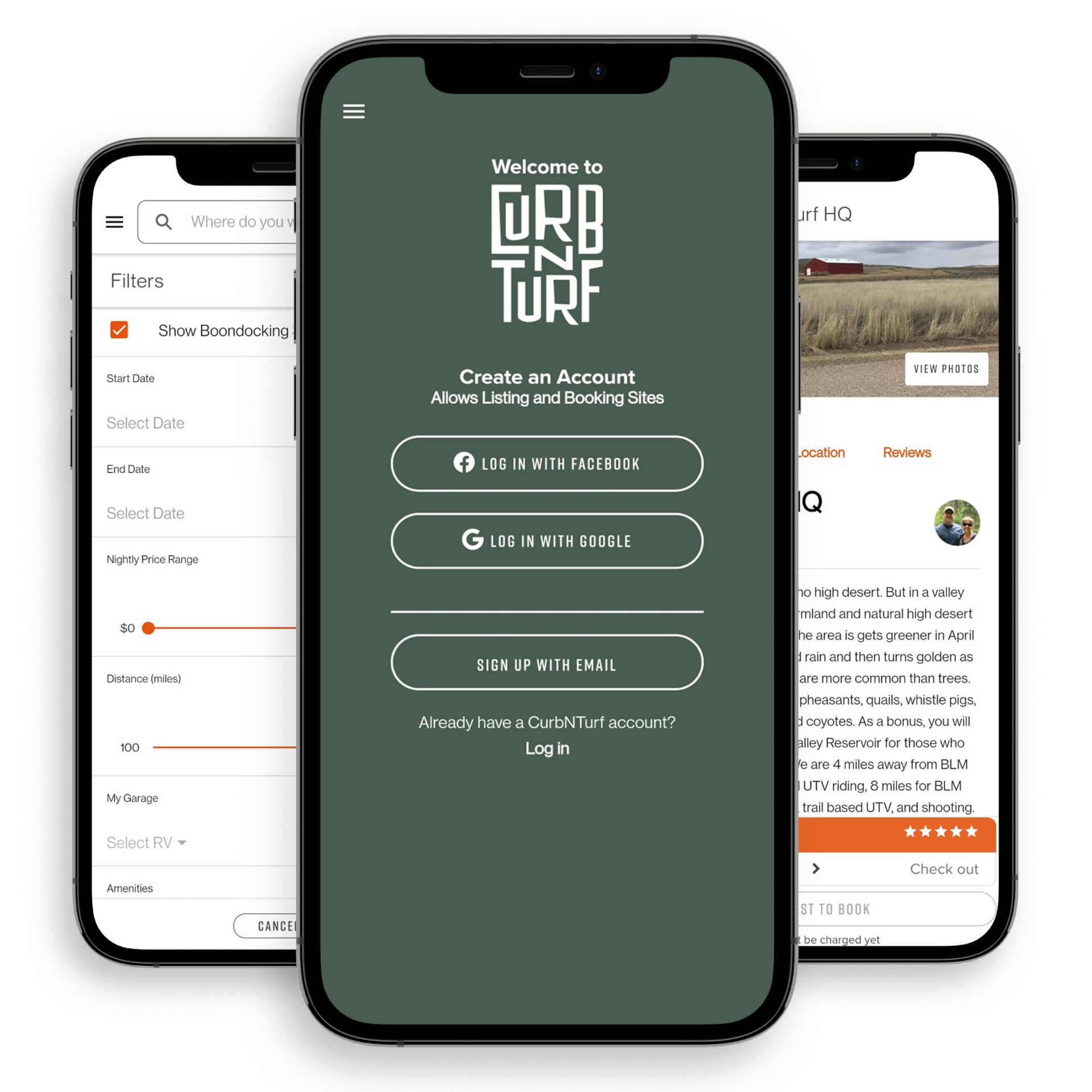
FREE TO DOWNLOAD, FREE TO USE.


Hey there, host! If your CurbNTurf listing currently says "no pets," you may be turning away half your potential guests without realizing it. Not half the people who ask. Half the people who never ask, because they filtered your property out before they ever saw it.
Here is what the data says, and then here is how to make pet-friendly hosting work on a real property without creating problems for yourself.
The Math That Should Get Your Attention
Start with how many campers actually travel with dogs. The Dyrt's 2024 Camping Report found that 53.7 percent of campers brought their dogs along, and RVers specifically showed a 20.8 percent higher likelihood of traveling with pets than other types of campers. A Go RVing survey put the number even higher, at 68 percent of campers traveling with pets. KOA's research consistently lands in the same territory, with 62 percent of their campers bringing pets and 62 percent of Millennial campers saying they always or sometimes camp with their animals.
Now here is the part that matters most for your listing. Fifty-two percent of pet owners say they will only stay at pet-friendly properties. Not prefer. Only. And 37 percent of dog owners report choosing not to travel at all rather than leave their dog behind.
Put those two facts together. Roughly half of RV travelers have a dog in the rig, and half of those travelers filter out any property that will not take them. When your listing says no pets, you are not competing for those bookings and losing. You are invisible to them entirely.
Flipping that switch does not guarantee your bookings will literally double. Location, pricing, photos, and reviews all still drive your calendar. But it does roughly double the pool of travelers who are eligible to book you in the first place, and for most hosts that is the single largest change they can make to their listing without spending a dollar on the property.
Why Private Land Has a Real Advantage Here
This is where CurbNTurf hosts have something commercial campgrounds cannot easily match.
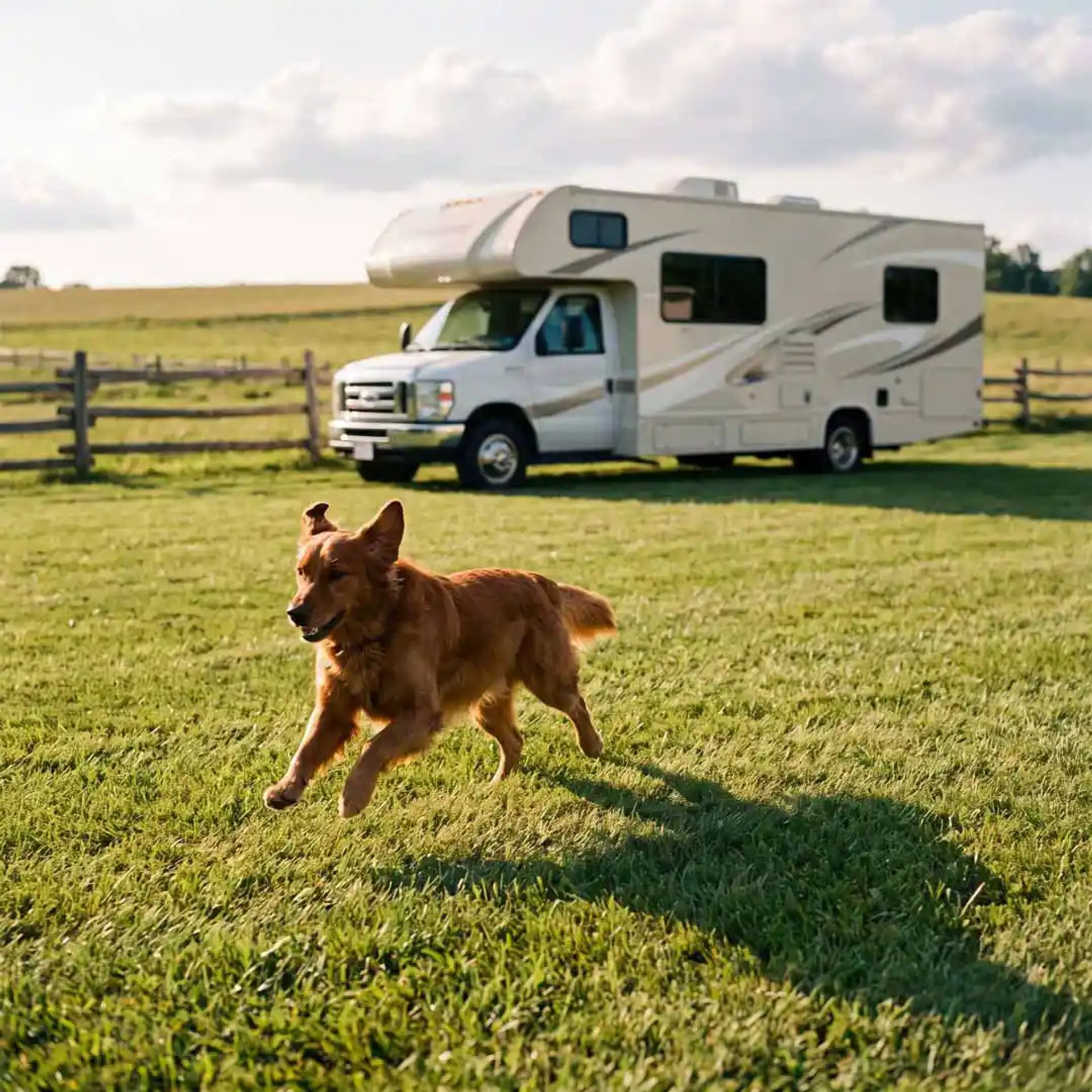
KOA found that 60 percent of Gen Z pet campers say getting their dog off-leash is essential to their camping experience. Commercial campgrounds handle this with a fenced dog run somewhere near the bathhouse, shared with every other dog in the park. It works, sort of.
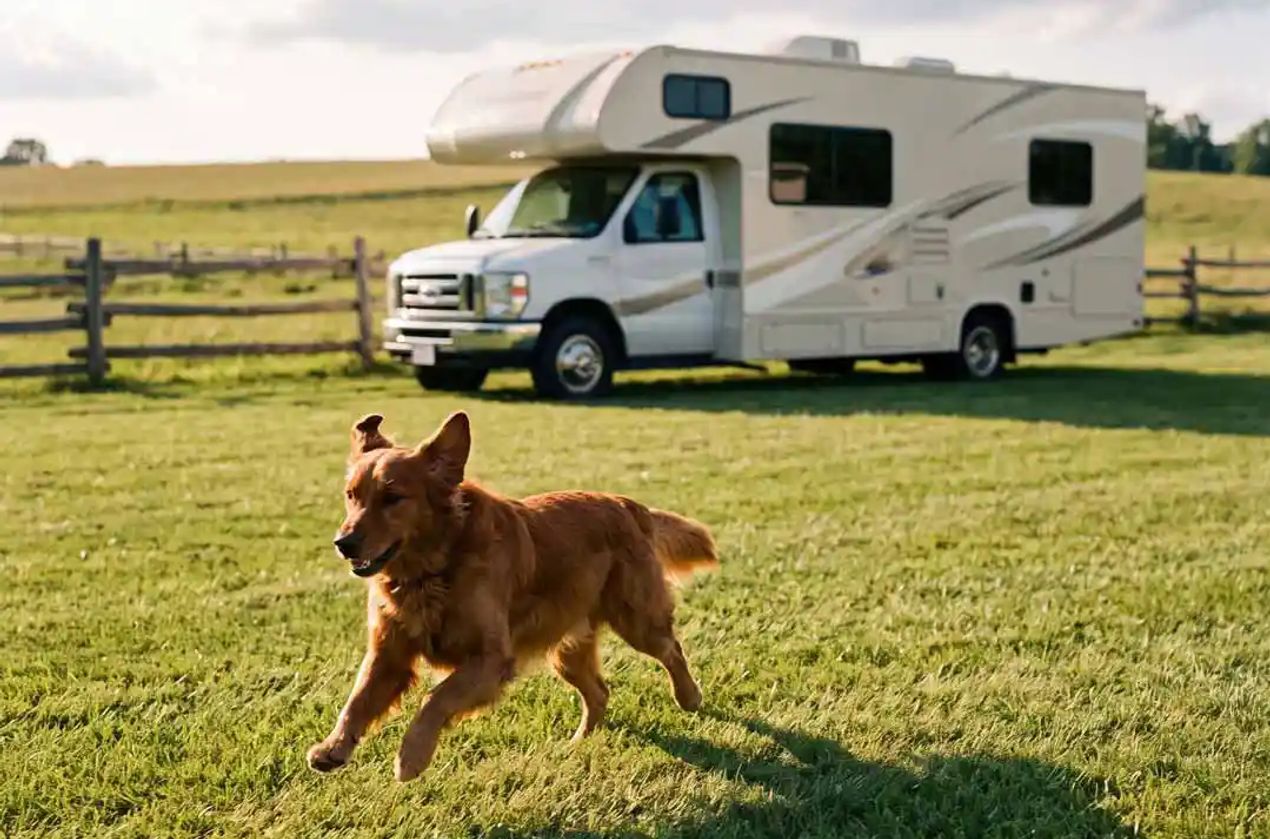
A private property is a fundamentally better product. Space, quiet, no other dogs fifteen feet away, and often a genuinely safe area where a dog can just be a dog. If your property has a fenced pasture, a quiet field, or even just enough distance from the road that a well-behaved dog can be off leash near the rig, you are offering something that is legitimately scarce and that a specific, motivated group of travelers is actively searching for.
That is not a small differentiator. It is the thing that makes a traveler with two labs pick your listing over three others.
How to Allow Dogs Without Creating Problems
Pet-friendly does not mean unrestricted. The hosts who do this well are specific about what they allow, and that specificity is what keeps the experience good for everyone.
Set clear rules and put them in the listing. Leashed at all times except in areas you designate. Cleaned up after, every time. Never left unattended outside the rig. Not allowed near livestock, equipment areas, or your family's private space. Owners are responsible for any damage. Hosts who state this plainly get better-behaved guests, because the people who were going to be a problem self-select out before booking. Our article Make Your CurbNTurf Listing Irresistible covers how to phrase rules so they read as welcoming rather than defensive.
Decide your limits honestly. How many dogs? Any size restrictions? Any breed restrictions your insurance requires? Write them down and put them in the listing rather than handling it awkwardly at arrival. Some homeowners and liability policies exclude specific breeds, so this is worth a direct conversation with your agent. Our guide on liability and insurance for CurbNTurf hosts covers the questions to ask.
Be explicit about livestock. If you run cattle, sheep, chickens, or horses, this is the single most important rule on your property. A loose dog and livestock is a genuinely serious situation for the animals, the dog, and your liability. State clearly which areas are off limits and why. Most guests respect it immediately when they understand there are animals at stake.
Consider a pet fee, but keep it reasonable. Many hosts charge a modest per-stay pet fee, often ten to twenty dollars, to cover the extra attention the site needs. Guests generally accept this without complaint. What they push back on is a fee that feels punitive relative to the nightly rate. Our article on pricing your site covers how to think about add-on pricing.
Low-Cost Upgrades That Punch Above Their Weight
You do not need to build a dog park. A few small things make your listing meaningfully more attractive to pet owners.
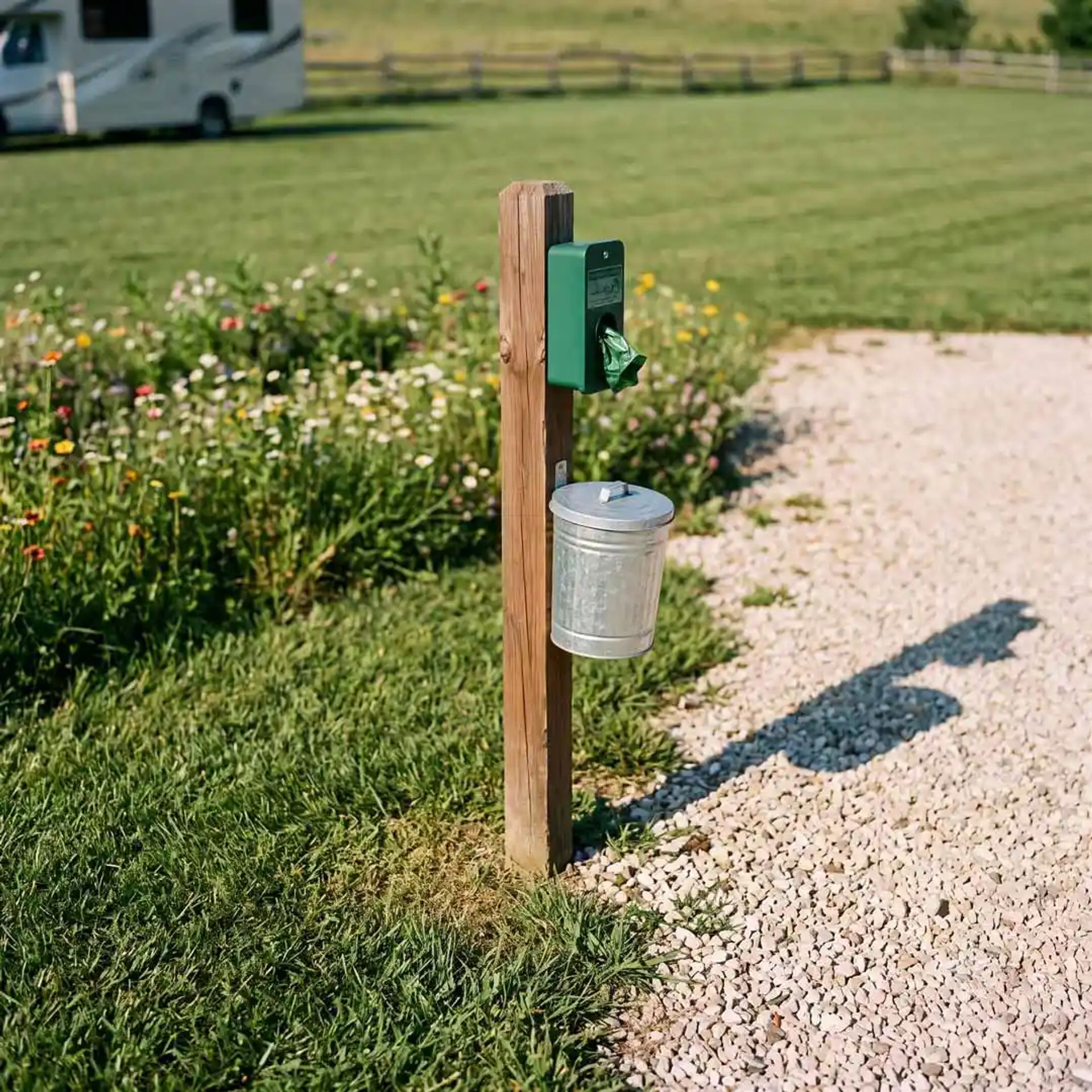
A waste station. A simple post with a bag dispenser and a lidded bin near the pad. Costs very little, signals immediately that you have thought about this, and dramatically improves the odds that guests actually clean up.
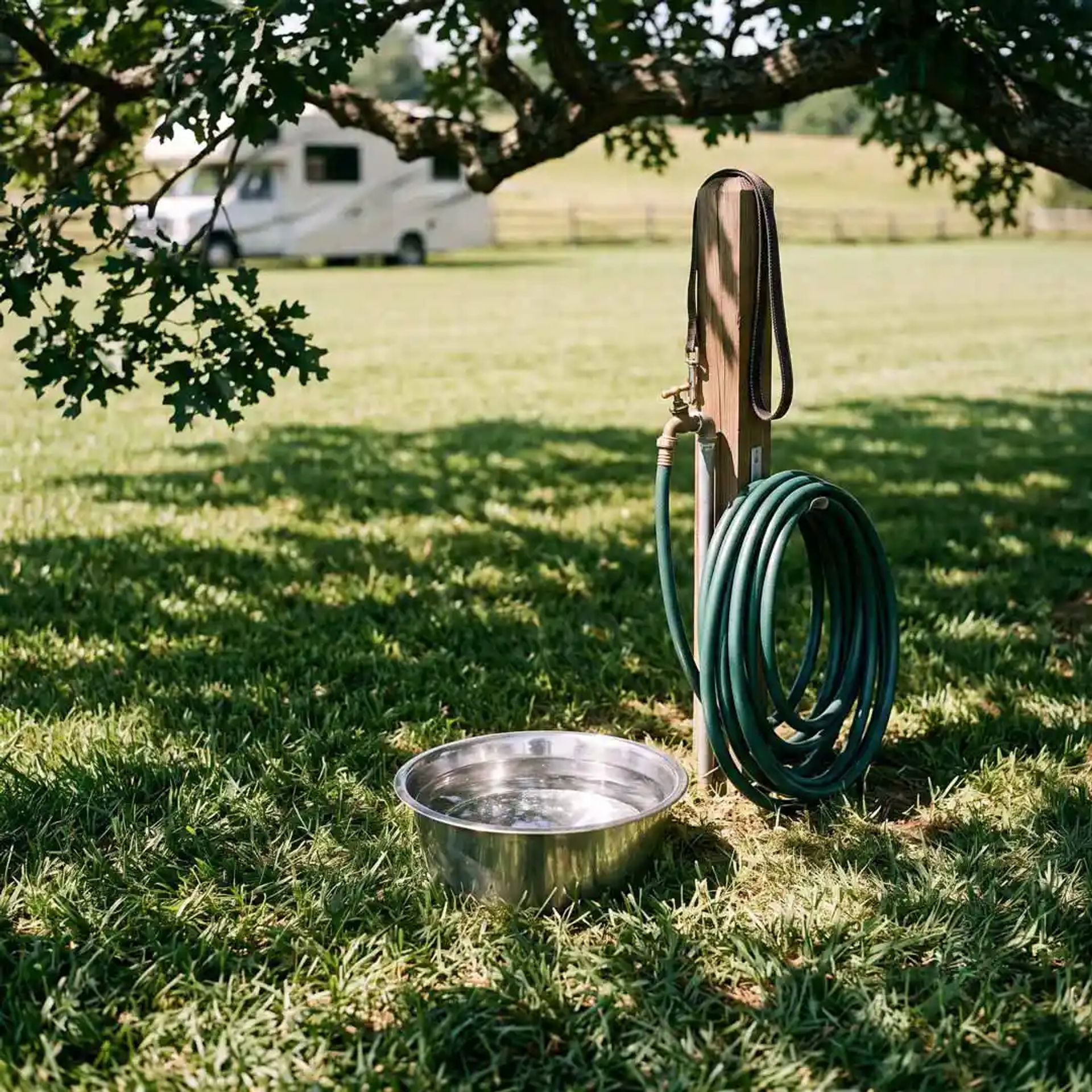
A water spigot or bowl near the pad. Dogs need water constantly in summer, and a guest who has to go inside the rig every time is a guest who is mildly annoyed the whole stay.
A shaded area. Dogs overheat faster than people. Mature trees or a spot where an awning works well is a real selling point, and it matters for the humans too. Our guide on hot-weather RVing without hookups covers the same principle from the guest side.
A tie-out anchor or a small fenced area. If you have or can create even a modest fenced space, say so prominently in your listing. This is the amenity pet travelers search for hardest and find least often.
Photos with a dog in them. If you or a previous guest has a friendly dog, a single photo of a dog relaxed on your property tells pet owners everything they need to know faster than a paragraph of text.
For more ideas on improving your site overall, How Hosts Can Improve Their Campsites covers upgrades that pay back quickly.
What About the Risks?
The honest answer is that most pet-related host problems come from unclear expectations rather than bad dogs. A guest who knows the rules, knows where the boundaries are, and knows you will hold them responsible for damage is generally a careful guest.
That said, set yourself up properly. Confirm your insurance situation before you flip the switch. Document your rules in your listing and repeat them in your welcome message. Take photos of your site before and after stays if damage is a concern. And if a guest arrives with more dogs than they booked, or an animal that is clearly not going to work on your property, handle it immediately rather than hoping. Our article on handling difficult guests has scripts for exactly that conversation.
Ready to Open Your Property to Dogs?
The travelers are already out there searching. Roughly half of them have a dog in the passenger seat, and a large share of those will not even look at a listing that says no pets. Meanwhile the thing they want most, real space where their dog can relax off leash, is something a private property can offer far more easily than a commercial campground can.
Log into your CurbNTurf listing, update your pet policy with clear specific rules, add a line about your fenced area or open space if you have one, and get in front of the largest group of travelers you are currently not reaching.
Keep Reading
- Liability and Insurance 101 for CurbNTurf Hosts to confirm your coverage before you change your pet policy.
- Make Your CurbNTurf Listing Irresistible: 5 Tips and AI Prompts to write pet rules that read as welcoming.
- Pricing Your Site: What Hosts Are Charging in 2026 to think through pet fees and add-on pricing.
- How Hosts Can Improve Their Campsites for practical upgrades that raise your booking rate.
- How to Handle Difficult Guests: Scripts and Boundaries for the conversations that occasionally come up.