



Room to Roam is your guide to RV travel adventures off the beaten path. Learn how to turn your land into a money-making opportunity by hosting RVers seeking unique, off-grid escapes. Get tips on RV hosting, chat with fellow hosts and RVers, and discover the latest on RV life from the CurbNTurf community.
Popular articles


FREE TO DOWNLOAD, FREE TO USE.


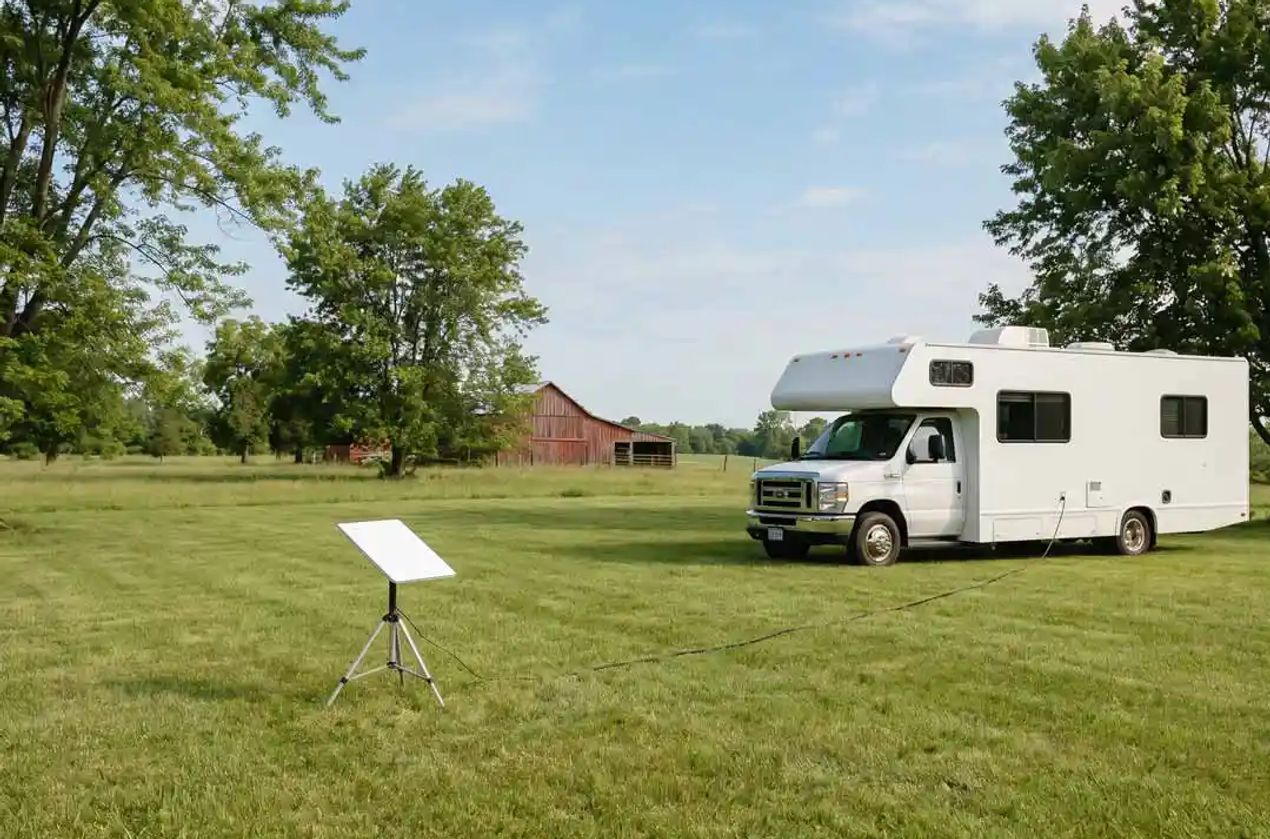
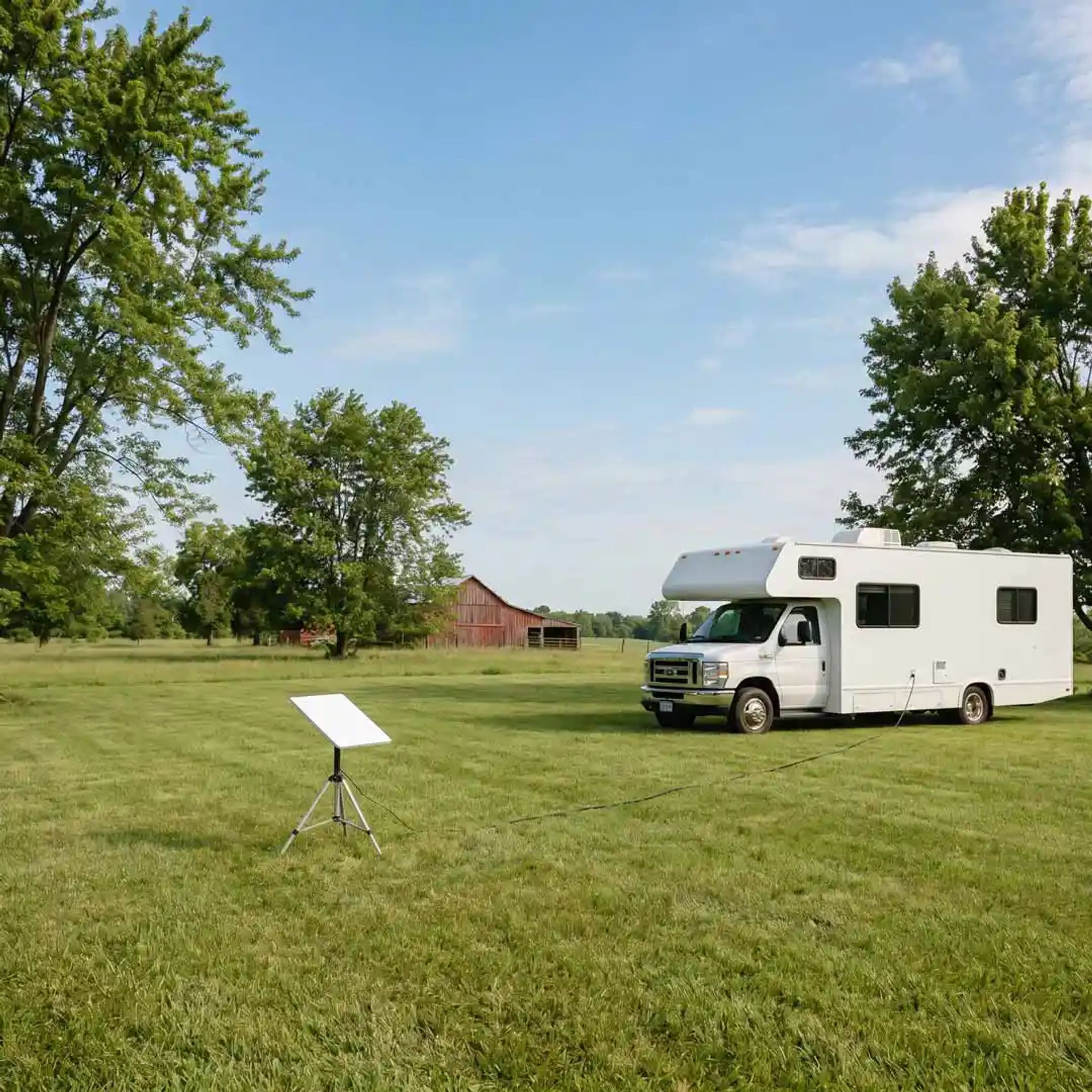
Hey there, fellow traveler! If you have spent any time in RV forums or YouTube comment sections over the past two years, you already know that Starlink has rewritten the rules of staying connected on the road. A satellite dish that fits in a backpack and pulls 100 Mbps in the middle of a hayfield is the kind of thing that would have sounded like science fiction five years ago. But $55 to $165 a month adds up fast, and at off-grid CurbNTurf sites with no shore power, your battery bank cares a lot about how many watts that little dish actually pulls. So is Starlink worth it for the way you actually travel? Let's break it down honestly.
What Starlink Actually Costs for RVers in 2026
The most important thing to understand is that Starlink's plan structure has changed multiple times in the past year, and the version most RVers want is called Roam. As of mid-2026, the Roam tiers in the United States look like this:
- Roam 50 GB: entry-level data cap, designed around the Starlink Mini.
- Roam 100 GB: starts around $55 per month.
- Roam 300 GB: around $80 per month, currently the sweet spot for many full-timers.
- Roam Unlimited: around $165 per month, no data cap, works in motion up to 100 MPH, and now operates worldwide on land without the old regional restriction.
Hardware runs $249.99 for the Starlink Mini and around $349 for the Standard Roam dish. You can also pause your service in months you are not traveling and switch to Standby Mode at about $5 per month, which keeps a basic low-speed link active without paying full price.
Two things to flag. First, prices have gone up several times since the product launched. Second, Starlink changed its hardware policy in June 2026 to make new residential dishes a rental ($10 per month), although the Roam Mini is still a purchase. If you are reading this article more than a few months after publication, double-check the current plan structure on Starlink's site before you commit.
The Power Question at Off-Grid Sites
This is where the Starlink conversation gets real for CurbNTurf travelers. Many of the most peaceful private land stays in our community are partial or fully dry sites, meaning your battery bank and solar panels are doing the work. So the question is not just "does Starlink fit my budget," it is also "does Starlink fit my power budget."
Here are the verified numbers:
Starlink Mini. Averages 16 to 40 watts in active use depending on activity, with about 15 watts at idle, and a brief 60-watt spike at startup that lasts only a minute or two. After a January 2026 firmware update, real-world steady-state draw on the Mini settled closer to 16 to 20 watts for many users.
Standard Starlink Roam dish. Averages 50 to 75 watts in active use, roughly double the Mini.
In daily energy terms, running the Mini 24 hours a day at a conservative 20-watt average works out to about 480 watt-hours. Run it only during your working hours (say 8 hours a day) and you drop to roughly 160 to 240 watt-hours per day. For comparison, a typical 12V deep-cycle RV battery holds about 1,200 watt-hours of usable lithium capacity.
The practical takeaway: a 200-watt solar panel plus a 100Ah lithium battery handles the Mini comfortably in good light, and a portable power station like a 500 to 1,000 watt-hour unit will run the Mini for one to two days of moderate use without recharging. The Standard Roam dish doubles those requirements and is the wrong choice if you are camping anywhere your solar input is limited.
One critical detail: if you plan to power the Mini from a USB-C power bank, that bank must support USB-C Power Delivery (PD) at 65 watts minimum, ideally 100 watts. Regular USB-C phone chargers will not work, and a power bank with too little PD output will cause the dish to reboot endlessly during the startup spike.
For a deeper look at matching your full power setup to where you camp, our guide on decoding power, water, and connectivity walks through every amenity icon and what each one means for your rig.
When Starlink Is Genuinely Worth It
Starlink earns its keep in three specific situations:
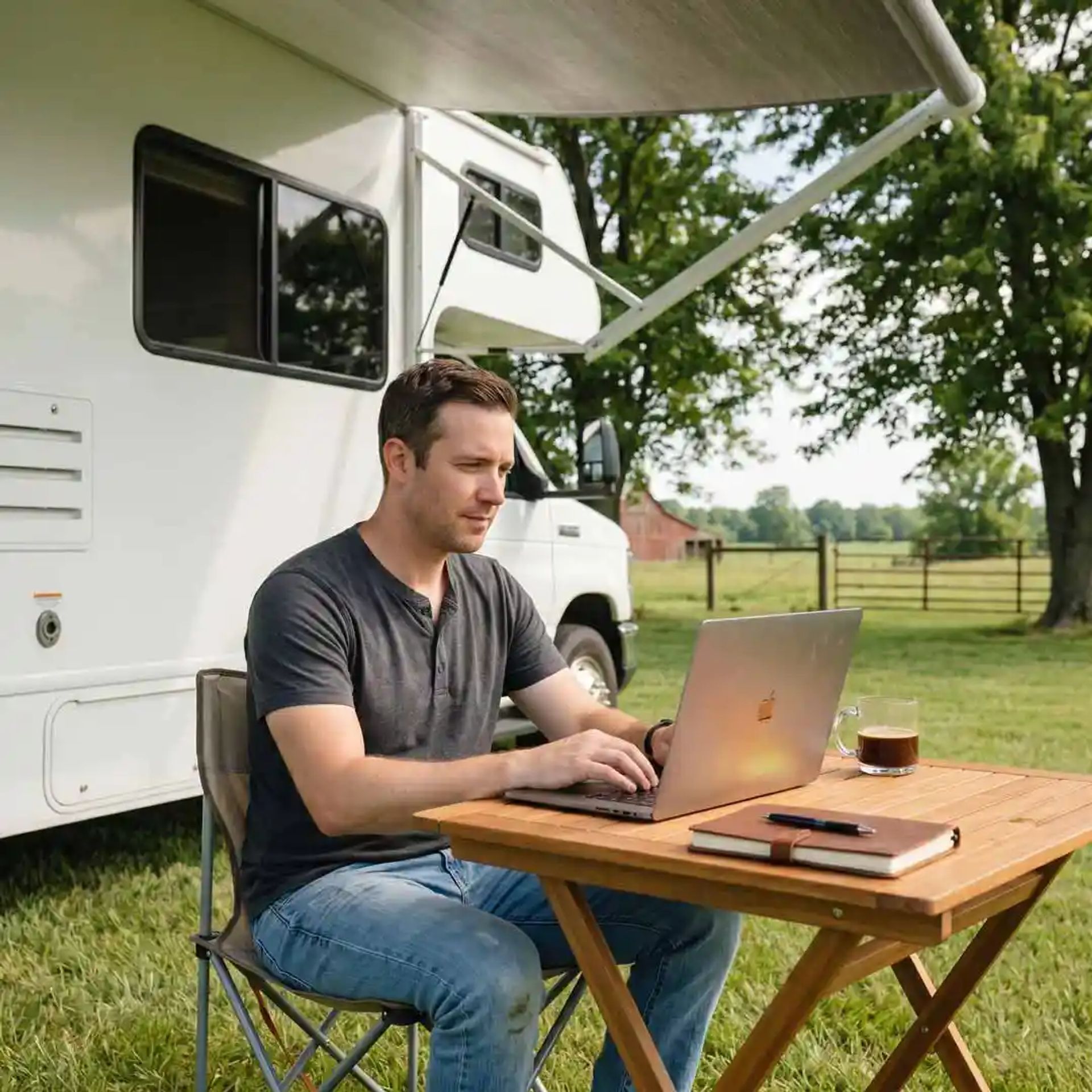
You work remotely while traveling. If your income depends on reliable internet and you camp in places where cellular signal is unreliable, Starlink is essentially the only consumer option that delivers consistent broadband-class speeds. Cellular hotspots top out around 5 to 15 watts of power draw and cost a fraction of Starlink per month, but they are useless in genuine dead zones. If you have ever lost a client call because the LTE signal dropped at exactly the wrong moment, Starlink solves that.
You camp at genuinely remote private land sites. Many CurbNTurf hosts offer beautiful properties miles from the nearest cell tower. Vineyards in rural California, ranches in eastern Montana, farms in the western Dakotas, homesteads in the Appalachian foothills. These are exactly the sites where Starlink delivers its biggest quality-of-life upgrade. If you regularly stay at properties like the ones described in our Seasonal Agritourism: A Calendar of Harvest-Based RV Stays, connectivity is often the missing piece.
You travel internationally or follow the eclipse-and-festival circuit. Roam now works globally on land, so if you cross borders or follow events into rural areas that flood with travelers (the kind of scarcity we cover in our article on booking around festivals and events), having your own internet means you do not depend on overloaded local infrastructure during the spike.
When You Probably Do Not Need It
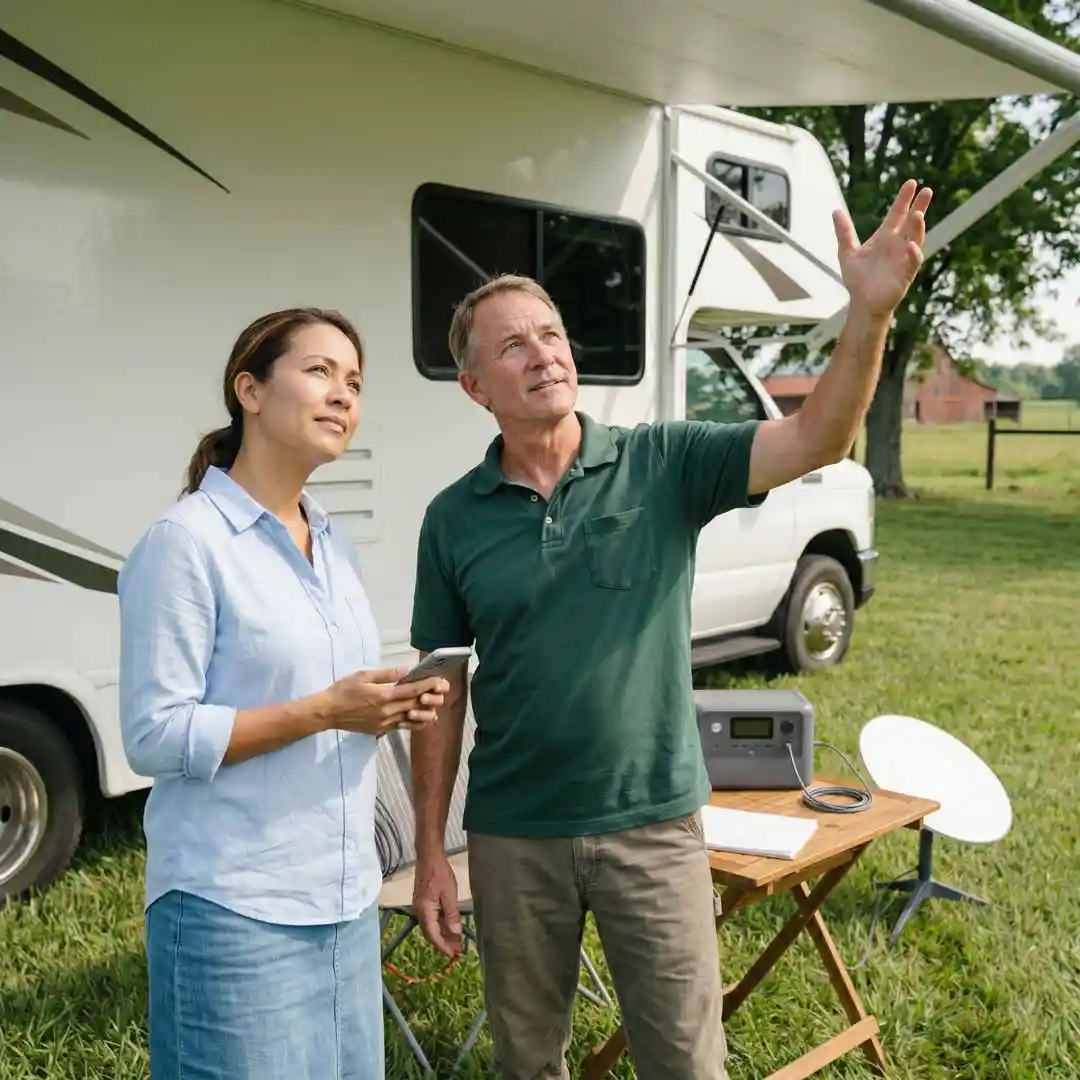
You mostly camp where you already have cell signal. A good cellular hotspot plan delivers more than enough bandwidth for streaming, video calls, and remote work for most of the country at a fraction of the monthly cost and power draw.
You travel seasonally on a tight power budget. If your rig has 100 watts of solar and a single lead-acid battery, even the Mini will be a strain. You can do it, but you will be managing your power closely. Pause-and-resume seasonality helps here, but the math is still tight.
You only need internet on park days. If you spend most evenings outside hiking trails, vineyards, or national parks, you may not actually use enough internet to justify $55 to $165 a month. National park gateway stays like the ones in our article on private RV stays near Yellowstone, Glacier, and Grand Teton often have surprisingly good cell coverage in town and zero connectivity in the park itself, which is exactly the point of being there.
A Quick Decision Framework
If you are deciding whether to invest in Starlink, ask three honest questions:
- Does your income depend on internet? If yes, lean toward Starlink.
- Do you regularly camp where cellular signal is poor or absent? If yes, lean toward Starlink.
- Can your power setup handle 480 watt-hours per day at the worst case? If no, either upgrade your power system first or stick with cellular.
If you answered yes to the first two and no to the third, the right move is often to upgrade your batteries and solar capacity before adding Starlink. Otherwise you will buy connectivity you cannot reliably power.
Pairing Connectivity With the Right Stays
The travelers getting the most out of Starlink are the ones who use it to unlock the kind of trips that were not possible before. Working a full week from a working ranch instead of a Wi-Fi-equipped commercial campground. Spending a month at a vineyard host without losing client calls. Following the seasons across a year of agritourism stays.
If you are brand new to private-land RVing, our step-by-step guide to booking your first CurbNTurf stay walks through the booking process, and if heat is part of your equation, Master Hot-Weather RVing Without Hookups covers how to stay comfortable on battery power alone.
Head over to CurbNTurf.com, search for private stays in the regions where you actually want to spend time, and let your connectivity decisions follow from where you want to be, not the other way around.
